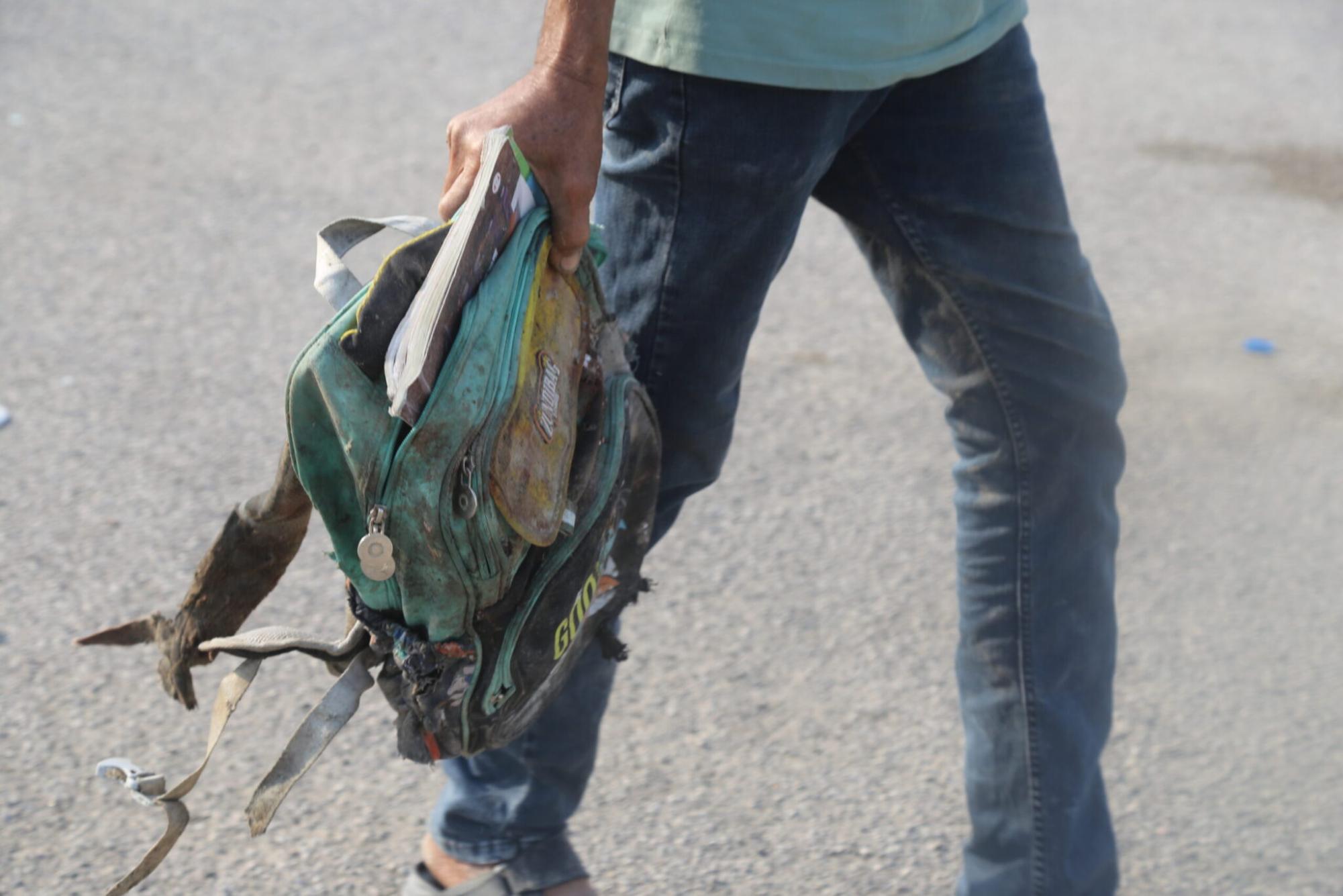
It was a Saturday morning, Feb. 28, in Shajareh Tayyebeh primary school when all hell broke loose. Several minutes earlier, reports of explosions across Iran had prompted the school’s administrators to send students home—but, unbeknownst to anyone, it was already too late.
In a few seconds, multiple US-owned and -operated Tomahawk missiles would rain down on the complex surrounding the school in the Iranian city of Minab, collapsing its main building as parents on their way to pick up their children watched in horror.
In the series of strikes named by the Pentagon as “Operation Epic Fury,” at least 175 were killed. The majority were younger than 12. But who will be held accountable?
To begin with, let’s get the lies out of the way. It has been clearly established that the U.S. is responsible for the attack. BBC Verify has used video sources to confirm that Tomahawk missiles were involved in the attack, a class of artillery possessed by neither Israel nor Iran.
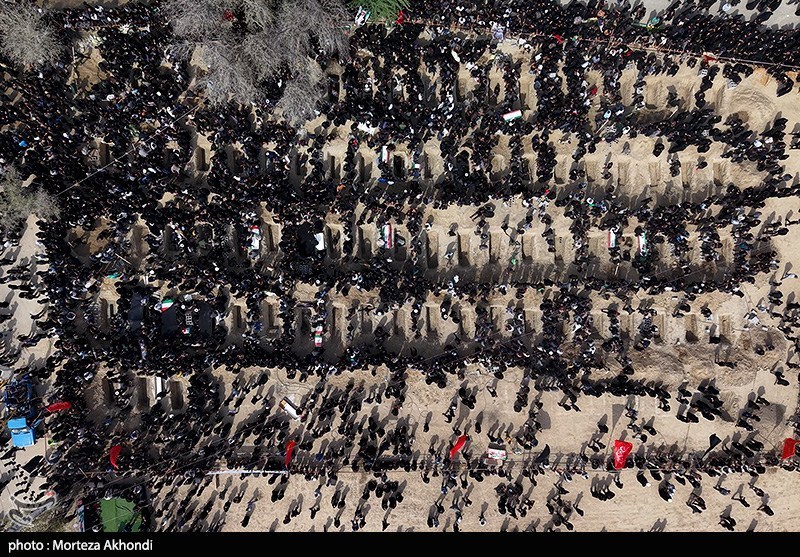
Over the past weeks, images and videos of bloodsoaked backpacks, severed arms and mass graves have emerged from the rubble, all of which have been verified by experts as authentic.
Moreover, while the death toll cannot be verified independently, it is not easy to fake such terrifying destruction.
Names on released lists of the deceased have matched those on photographed coffins and thousands have gathered at burial sites to mourn victims of the attack.
All of this death does not stop bad actors, however, from attempting to alter the narrative. Right-wing organizations like CAMERA, the “Committee for Accuracy in Middle East Reporting and Analysis,” have continued to suggest Iranian responsibility for the attacks, disingenuously shifting public discourse away from the heinous nature of the strikes and toward questions of verifiability.
Putting the situation on the ground aside, the US government has a lot to answer for: why was a strike conducted on an obviously non-military target?
Media reports suggest that the school’s location was erroneously included in a target database due to a nearby Islamic Revolutionary Guard Corps compound.
However, satellite imagery demonstrates that the area containing Shajareh Tayyebeh became an elementary school sometime between 2013 and 2016, when walls were constructed to separate it from the military base.
Besides being an obvious embarrassment to the Trump administration, this lack of oversight raises some important questions. How can the US—one of the most powerful nations in the world, with one of the most technologically developed militaries—lack the basic planning and foresight necessary to vet potential targets before conducting deadly missile strikes?
How did a decade go by with no updates to our military intelligence, regardless of the human lives at stake? And perhaps most importantly, how long can powerful nations wreak havoc on the Middle East before they face any consequences?
For too long, we have adopted a dangerous attitude—that civilian deaths in war, however tragic they may be, are a byproduct of a necessary process. While we hold ceremonies for our fallen soldiers, the deaths in Minab are viewed as abstract statistics. They are “collateral damage,” not human beings—mostly children—each with a voice and a family and a life taken from them by human negligence.
The strikes on Minab constitute a war crime. That crime is mass murder. And, as behind any murder, there are murderers—Donald Trump, Pete Hegseth and all those in the chain of command who are complicit in the execution of civilians and the continuation of this war.
As a nation, we are no stranger to war crimes; Trump has threatened the total destruction of civilian energy infrastructure in Iran on multiple occasions, blatantly violating the principles of international law. But the attacks on Minab are a different beast entirely—they represent a brazen and unjustifiable loss of hundreds of lives, something that goes against the very fiber of human morality and yet is pushed aside.
It does not matter that the strikes were accidental, nor that the administration leaders were not the ones to pull the metaphorical trigger. Had they, in place of constant fearmongering and lies, in place of hubris and emotion as diplomacy, done the simple task of maintaining the peace—then, just maybe, the FIFA Peace Prize winner we call president would not have the blood of nearly 200 children on his hands.
We, as Americans, are a privileged class. While we lament the cost of gas, civilians throughout the Middle East fear for their lives. We live in a different frame of reference, one in which the economy holds more weight than the destruction we cause overseas.
Slowly but surely, we will let any mention of Minab either disappear from the headlines or be dismissed as Iranian propaganda, with no consequences for those responsible. Our politicians are above the law—not because these war crimes are legal, but because to a significant number of Americans the Middle East is nothing more than a testing ground for our missiles.
It is easier to be complicit than to fight for the impeachment of a demonstrably incompetent war criminal. It is easier to be complicit than to overturn the American legacy of terror. It is easier to be complicit, even if that means that every one of us has blood on our hands. But is it right?
On April 7, more than a month after the attacks, the President of the United States did not apologize for the murders at Minab, nor for the trauma that will persist long after his death. He did something else entirely.
“A whole civilization will die tonight, never to be brought back again. I don’t want that to happen, but it probably will,” he posted to his millions of followers on social media.
He can make excuses for every last person he kills. He can make thinly veiled threats of genocide, and by virtue of our collective apathy, he can get away with it. But in Minab, there are 175 holes in the ground, a body in each. And they tell a different story.