
Five consecutive years of above-target inflation add up quick. That reality is reflected in low wages, high restaurant tabs and pricier commodities.
Over just half a decade during the aftermath of the COVID-19 pandemic that upended the global economy, consumer prices have risen by nearly 25%.
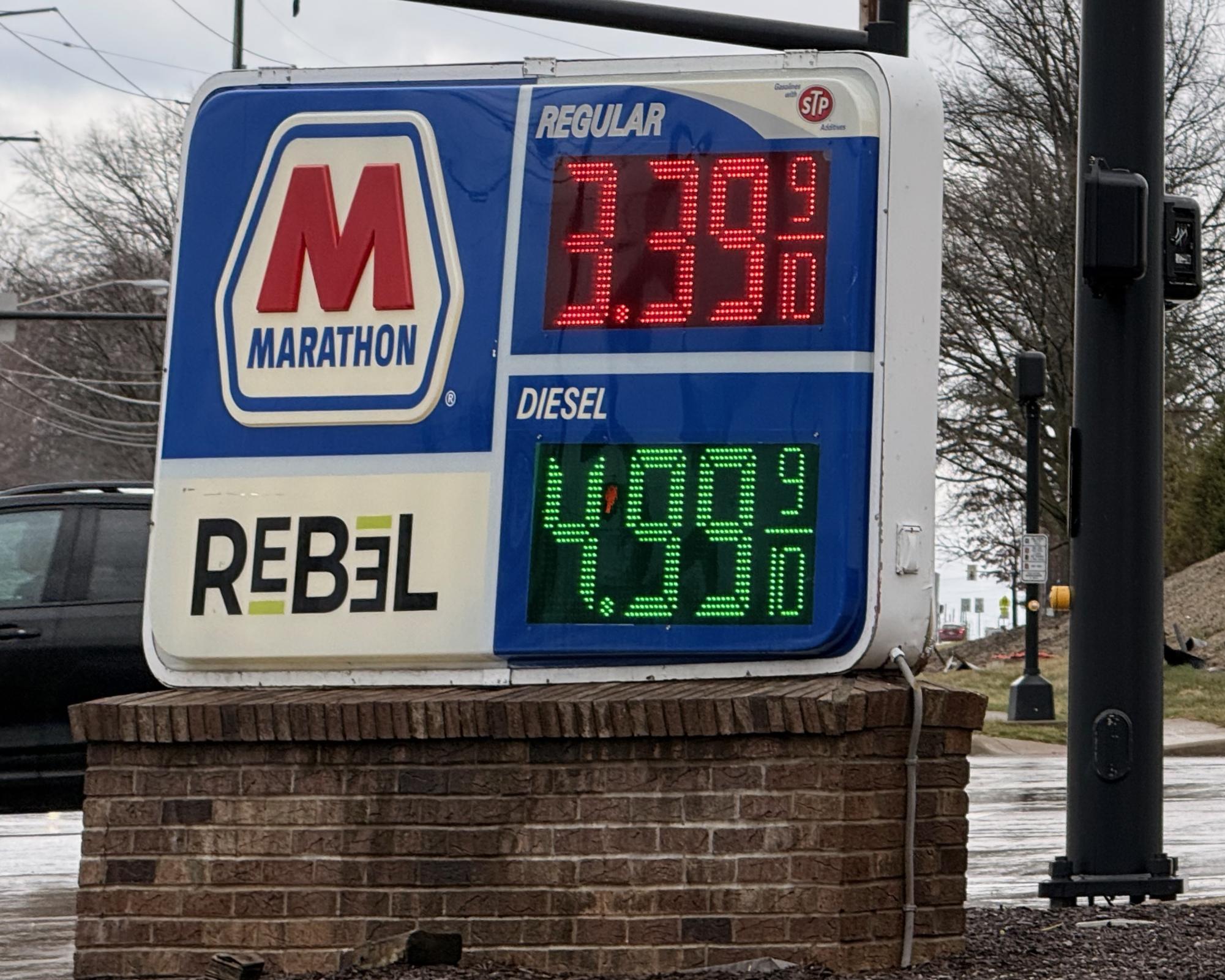
To make matters worse, the war in Iran sent gas prices up 55 cents per gallon in early March, reaching a $3.42 average in Cleveland as of March 9. According to NBC News, oil prices have now risen 40 percent since the start of the war.
All across the nation, inflation has caused widespread dissatisfaction with the general state of the economy and its direct consequence on the cost of living.Yet, some BHS students have grown accustomed to the effects of post-COVID inflation.
Sophomore Max Spyke, for instance, has simply decided to plan around the cost of living crisis for the next chapter of his life.
“I don’t really want to go to California for college, where inflation’s probably the highest, but I was thinking about staying in Ohio, where I think the rent and income tax and everything is more manageable,” Spyke said.
For others, like senior Ben Allen, the pursuit of higher education outweighs whatever economic crises may exist at the moment. His decisions on where to apply have not been swayed by current economic conditions.
“I didn’t really take the cost of living into account when applying for college,” Allen said.
On the flip side, a 2024 survey found that over three out of every four students consider the total cost of college when making their applications. With many undergraduates likely facing years of debt repayment, it comes as no surprise that loan-forgiveness efforts like the SAVE Plan have been promoted in recent years, but many such programs face hostility from the incumbent presidential administration.
In fact, the Trump administration plans to completely cancel its predecessor’s SAVE Plan. Designed to lower student loan repayments, the plan featured provisions for lower monthly payments, like $0 for some low-income earners and no interest for those who fulfill their required monthly payments.
Given the dramatic rise in college tuition costs, with the sticker price today estimated to be about double what it was 30 years ago, there will be a large financial impact on the roughly 87% of students pursuing a college education via financial aid. Nationwide, one in six adult Americans still have college debt.
A far more immediate metric by which one can judge the cost of living is the general price of food. Grocery and restaurant prices are both affected by inflation, and accordingly, both have grown: the former, on average, by about 29% since February of 2020, and for the latter by about 31%.
Sophomore Clarence Ouyang recorded some of his specific observations on the state of restaurant pricing, locally speaking.
“I went to Choolah, and their prices were a lot cheaper [than expected],” he said. “I think $10 for a bowl is pretty reasonable from Choolah. And $15 at Chipotle, they’re gonna give you a lot. It is decently reasonable.”
Ouyang still recognizes that eating out is generally quite expensive, but emphasizes that dining out is still a choice.
“It costs a lot, but you know what you’re going into when you purchase [a food] item,” Ouyang said.
As inflation persists, it affects both restaurant prices and the value of everyday items at the grocery store. The phenomenon of shrinkflation reveals that not only can prices go up for foodstuffs, but they can also stay the same while the amount of value decreases. Three quarters of surveyed customers have experienced shrinkflation, and it remains a major problem alongside other economic concerns.
Spyke has noticed a pricier food scene that reflects diminishing value—in his experience, the average meal at a restaurant is $16 per person. Even at local favorite Mitchell’s Ice Cream, he has seen a rise in prices.
“At Mitchell’s, technically an ice cream establishment, every year the price for a single [scoop] goes up by [what feels like] 25 cents,” he said.
Nevertheless, Spyke views eating at home and spending as conservatively as possible as a more affordable option.
“If you spend most of your nights cooking at home, not going out, getting ice cream, food, whatever, it’s fine. If you go once or twice a week, it’ll be manageable,” he said.
For most students, one unexpected place where inflation shows up is the cost of subscriptions—though they vary in type and cost, many Beachwood students have caught sight of one price hike or another.
Allen, an avid Spotify listener and subscriber, noticed a recent increase in monthly subscription cost.
“The only subscription I have where I’ve noticed a price hike is Spotify,” said Allen of the streaming service’s pricing.
Spyke, who subscribes to the same service, doesn’t see too much of an issue with the monthly fee as it currently stands.
“I’d say I’m getting pretty good value, because I have my brothers on my plan, and it’s $20 a month, so we each pay about $7,” he said. “It’s been a good six months since I’ve been paying for Spotify Premium, and it’s really nice.”
Growing subscription costs also pose a major concern for many Americans. The average American may pay over $1,000 per year in subscription fees, and as they steadily increase in sectors like streaming, households face yet another strain on their finances.
Most importantly, although not many students grasp its effects, the multinational tariffs levied by the US—announced on April 2, 2025, a date that President Trump calls “Liberation Day”—seem to weigh heavily on the average family’s economic health. Certain estimates suggest that the tariffs, on average, cost the American household over $1,000 this year alone.
Overseas manufacturers affected by tariffs tend to pass losses on to consumers, which means that the overall rise in prices throughout the market is connected to foreign supply chains.
Coupled with a weak labor market, tariffs have also helped increase the cost of manufacturing at a rate that rivals COVID-era spiking.
Still, universal tariffs may be an issue limited only to the current administration, coming and going as was the case with steel tariffs in the transition from the first Trump administration to the Biden administration.
Regardless of the effects of tariffs, for many BHS students, the story is simple: inflation skyrocketed, and the world hasn’t yet caught up to compensate for it. Now, the next generation has to rely on their wages to bail them out of the repercussions of compounding inflation, though their wages are not adequate to do so.
As put by Spyke, who estimates his part-time job’s weekly salary at about $150, there are certain jobs where financial security and living a comfortable life don’t go hand in hand.
“I’m a dishwasher, and if I did that full-time, I don’t think I’d be able to live on my own and stuff unless I never went out,” he said. “If I used that money for family, rent, and like the cost of living at a basic level, then I think I’d be fine, but that’s pretty hard to do.”
Ouyang, who is also reviewing his options and considering a part-time job in the foreseeable future, shared similar concerns about the vulnerability of low-income jobs.
“I feel like as inflation increases, the minimum wage doesn’t increase effectively in order to match inflation, so lower-paying jobs keep on getting left behind in the rat race,” Ouyang said. “It really depends. In this economy, you have to have a well-paying job… living paycheck to paycheck is no longer sustainable for many people.”
The cost of living is projected by the Social Security Administration to grow by 2.8% this year, perpetuating the burden of inflation that has weighed down the US economy since early 2020. With the 9.1% inflation peak—the highest in 40 years—not even three years in the past, its effects linger today, settling into everyday life.
Inflation is impacting every aspect of the lives of Beachwood students, and many are frustrated, but understand that there is little they can do about it. For many, the best course of action seems to be simply adapting and accepting the economy for what it is.