

When I recently visited a local CVS pharmacy, I noticed something I had never really paid attention to before. There was a large, white box labeled “Medication Disposal” sitting near the pharmacy counter.
I had heard about the importance of safe drug disposal before, but I had never noticed the disposal kiosk sitting right there in my local pharmacy.
Curious, I asked the pharmacy technician how often people actually use it.
She seemed a bit unsure and did not know much about it herself. She told me it was rarely used.
That moment stayed with me. If tools that help prevent drug misuse and accidental overdoses already exist in plain sight, why aren’t people using them?
But I realized that I myself had walked past that kiosk countless times without noticing it. The problem was not access, but awareness.
Safe medication disposal is one of the simplest yet most overlooked ways to reduce substance misuse, accidental overdoses and environmental harm. Yet, despite the risks of keeping unused or expired medications at home, lack of awareness has diminished the effectiveness of this method.
According to 2023 CDC data, 8.6 million Americans aged 12 or older reported misusing prescription opioids in the past year. Another national survey found that friends and relatives were a leading source for people aged 12 or older who misused prescription drugs, with 42.3 percent reporting that they obtained the pain relievers from a friend or relative (whether being given them, buying them or taking them without asking).
The data clearly shows that prescription misuse does not always begin with illegal drug markets, but more often, medicine cabinets.
Unused medications can create multiple risks. They can be accidentally ingested by children, intentionally misused or shared without understanding proper dosing.
Expired medications may lose their effectiveness or even become harmful.
Improper disposal methods, such as flushing medications or throwing them loosely into the trash can damage water systems and cause environmental harm.
Yet there are safe, practical alternatives, including pharmacy kiosks, National Drug Take Back Day events and at-home deactivation products like Deterra pouches that safely deactivate medications before disposal.
But if disposal options exist, why are so many people unaware of them?
To better understand why awareness remains limited, I spoke with Jeff Horwitz, CEO of SAFE Project, a nonprofit dedicated to combating the addiction fatality epidemic.
Horwitz said that part of the problem lies in how national drug disposal campaigns have been structured.
“I think many people don’t know about drug take back day because it’s such low hanging fruit for the Drug Enforcement Administration (DEA),” he said. “DEA does this as a function, but it’s a low-priority function for them.”
According to Horwitz, the issue isn’t necessarily the lack of programs, but the lack of continuous public messaging about them.
“It’s a visibility issue,” he said. “They invest a lot of money, but at the end of the day I don’t know that it’s advertised and campaigned as much, because the investment that the government has in the DEA is really invested elsewhere.”
I also spoke with Ronna Yablonski, Senior Director of Prevention at SAFE Project, who has worked for years on prevention initiatives.
Yablonski’s path into prevention work began with a personal realization about the power of presence when she worked as a tutor at an adolescent inpatient drug and alcohol treatment facility.
“One of the lessons that I learned is that I could make a difference by simply showing up, and that week after week, I was a consistent face,” she said. “It was a very easy thing for me to be present and to work with these students in such a way that they would feel seen and heard and valued.”
That same belief in the power of consistent presence now shapes how she approaches prevention work on a broader scale.
From her experience, Yablonski explained that the lack of awareness surrounding safe drug disposal primarily arises from limited education and outreach.
“Most households simply aren’t aware that these products exist, and I think this is due to limited messaging,” she said. “To the best of my knowledge, it is not standard practice in patient education.”
She added that when patients visit physicians, they are rarely told what to do with unused medication.
“It’s not standard practice to say, ‘If you don’t use these medications, there is a way to safely dispose of them,’” she said.
Yablonski acknowledged that some healthcare providers and pharmacies are taking initiative.
In fact, Yablonski shared that she has personally seen how powerful that proactive approach can be, describing one independently owned pharmacy that created a private consultation space in a small cubicle with a curtain for confidentiality.
Every time someone picked up a prescription, the staff offered an optional education session to review medication safety and proper usage.
“While [customers] meet with them, they then say, ‘We want to make you aware of proper disposal options, just in case these medications don’t work for you, or you don’t use them all,’” she said.
The intentional use of the “moment of contact” made a difference.
“I think it’s a great opportunity,” she said. “I think that it is a moment where this education could be shared with the customer, and I can also offer a testimony of support that says, when it’s there, it does work.”
Not every pharmacy needs to build a consultation cubicle, she added. But when patients are present or engaged, even a brief conversation about safe disposal can shift behavior.
Many patients hold on to unused medication because they feel wasteful throwing it away. Others think they may need it later.
“People often think, ‘What if I need this later?’ I’ve heard people say, ‘Why would I throw away something I paid for?’ That’s a valid reason for sure,” she said.
But she emphasized that the risk must be weighed carefully.
“Unused or expired medications especially have a high likelihood of causing harm,” she said. “They can be accidentally ingested or intentionally misused.”
The concern is not about over-the-counter or prescription pain relievers. It is about recognizing that opioids and addictive medications carry risks that extend beyond the person for whom they were prescribed, and that improper disposal can cause even greater harm for the environment.
Recognizing those risks has led to the implementation of organized disposal initiatives at the national level.
Twice each year, on the last Saturday of April and October, communities across the country participate in the DEA National Prescription Drug Take Back Day, allowing residents to drop off unused medications at temporary collection sites such as police stations, pharmacies and community centers, where they will be disposed of free of charge.
However, Horwitz noted that these national initiatives do not always target the medications that have the greatest risk.
“What we discovered after we started the campaign is that there were some studies done, like one done in 2019 by the Government Accountability Office, looking at what people actually put in those DEA boxes,” he said.
“It was a ridiculous number, but less than 3% of the medication that was put in there were actually opioids or controlled substances,” Horwitz said. “The rest was things like expired Tylenol or aspirin.”
Because of this, Horwitz believes that some campaigns have focused more on collecting large quantities of medication rather than addressing the specific risks associated with addictive drugs.
“So to a large degree, the campaign was more about bringing in a weight or poundage of [unused medication], and not really talking about the risks of the things sitting in the medicine cabinet,” he said.
Take Back Day also happens periodically, so it cannot be the only solution. Many people miss the event date, forget about it, or are unaware it exists. This is why year-round disposal options are essential.
One alternative, as mentioned before, is visiting permanent drug collection sites, which are usually located in pharmacies like CVS and also at local medical centers such as University Hospitals. These kiosks provide year-round options for individuals who prefer to drop medications off outside their home.
However, even when kiosks are available, Horwitz explained that stigma can discourage people from using them.
“The second type of disposal is that you can take medications to a hospital, a pharmacy or a fire department that has a disposal kiosk,” he said. “But I think the biggest impediment in all of those cases is the stigma.”
According to Horwitz, some people feel uncomfortable walking into a public place carrying unused medications.
“No one wants to walk in with a bag of a bunch of drugs in a public space,” he said. “Especially if it’s a police or fire station, there’s just this fear that it’s a big problem.”
Because of this hesitation, for those who prefer to handle disposal in the privacy and convenience of their own home, at-home deactivation products offer another solution.
At-home disposal products such as Deterra drug deactivation pouches allow consumers to neutralize medications immediately, without needing to travel or wait for a take-back event.
These pouches use activated carbon to bind to medication compounds, making them inert and safe for disposal in the regular trash.
The impact of this approach can be significant. One study from 2021 found that proper disposal rates increased from 19% to 92% when patients were provided with an at-home disposal product and taught to use it.
Deterra pouches deactivate most organic prescription and over-the-counter medications, including pills, liquids, patches and creams. This includes commonly-prescribed opioids such as oxycodone, hydrocodone, morphine and codeine, as well as stimulants and other medications with potential for misuse.
Yablonski emphasized which drugs are most important to dispose of properly.
“The highest priority is definitely opioid medications and anything addictive,” she said. “Those shouldn’t be sitting around if they’re not needed.”
She also encouraged starting to dispose of medications with the highest risk.
“I’d encourage people to first start disposing of opioids, addictive medications and anything expired,” she said. “That’s the safest first step.”
Using a pouch is straightforward. The medications are placed inside, warm water is added halfway, and after around 30 seconds, the pouch can be sealed. The activated carbon binds to the drugs, neutralizing the harmful components and preventing environmental contamination. Once sealed, it is gently shaken and disposed of in the normal trash.
Yet there are limitations. Disposal pouches do not work for injectable medications such as diabetic pens or EpiPens, which require sharps containers or specialized disposal programs. Certain biologics and inorganic medications also require different disposal methods.
Horwitz also noted that while at-home disposal products provide a practical solution, the industry promoting them remains fragmented.
“There are four major companies that have at-home disposal products: the Deterra pouch, DisposeRx pouch, and two liquid-based products,” he said. “All four of those products seem to work, but to what level they work is up to themselves, because they keep arguing with each other.”
Competition between companies has sometimes overshadowed broader public education.
“They spend more time competing about who has the best product rather than really working together on the national need,” he said. “So to a large degree it’s been left to volunteers or nonprofits to talk about the importance of getting drugs or medications out of the house.”
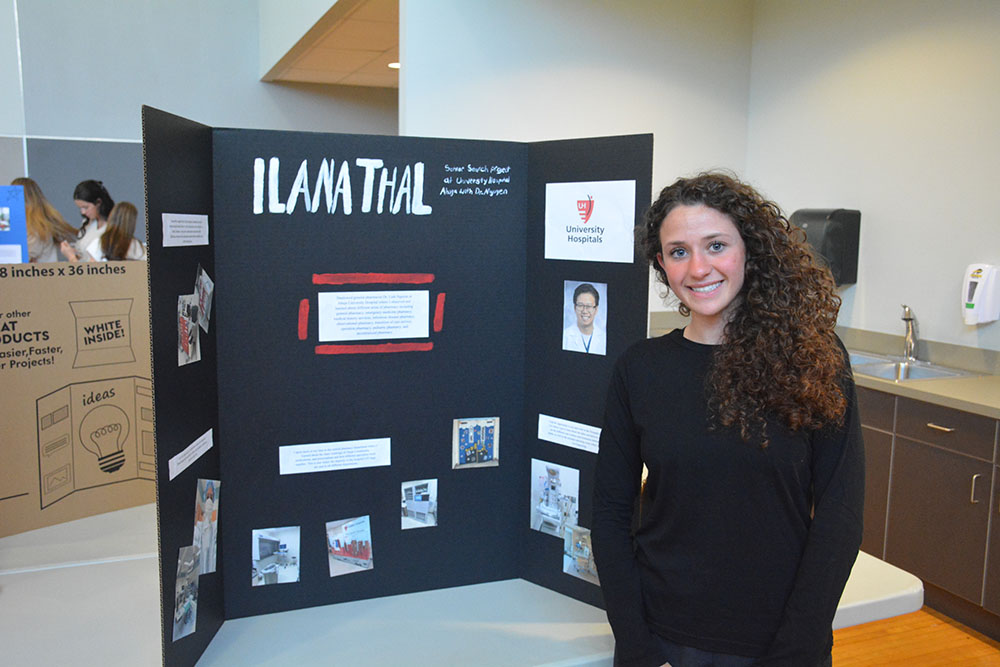
This is why, as a Youth VOICE Council member of SAFE Project, I decided to work in coordination with the organization to host local campaigns focused on educating community members about Deterra pouches and the importance of safe medication disposal, while also distributing the pouches free of charge.
On Feb. 19 and Feb. 24, I led and organized community campaigns at the Beachwood community center and library with the support of student leaders from the SAY Leadership Council. Together, we educated more than 78 adults, senior citizens and teens about safe drug disposal and distributed over 80 Deterra pouches.
At the community center, I delivered a brief speech to the senior citizens explaining why safe disposal matters and how to properly use the disposal pouches.
At the library, we set up a table near the front entrance and briefly educated passersby on drug disposal and distributed the pouches to them. Participants completed surveys before and after the educational sessions to measure awareness and levels of confidence in using the product.
The pre-education survey results revealed a clear awareness gap. Nearly 63% of participants reported having unused or expired prescription medications in their homes. While 41% said they used pharmacy kiosks or take-back events, 47% reported using unsafe disposal methods such as flushing medications, throwing them in the trash, or keeping them “just in case.” Most notably, 90% were unaware that at-home drug disposal products even existed prior to the presentation.
After the educational session, the results shifted significantly. 81% of participants reported that they understood why safe medication disposal matters well or very well. Nearly 90% indicated they understood how to use the pouch correctly, and 76% said they felt confident or very confident using it. Most encouragingly, 85% of participants said they planned to use the disposal pouch they received, with more than half stating they intended to use it immediately.
The survey results demonstrated that the barrier was not resistance, but awareness. Once people understood both the risk and the solution, they were much more willing to take action.
Horwitz shared that SAFE Project had observed similar patterns during its national drug disposal campaigns.
“We started the big campaign when COVID hit, when people were not going outside,” he said. “What we found was that people would reach out and request a pouch, and it would be sent with materials and surveys to see whether or not they were using it.”
The results reflected a clear pattern in behavior towards drug disposal.
“What we found from the data is pretty consistent with some of the research out there,” he said. “If someone has an at-home disposal pouch, they’re more likely to use it and destroy the drugs within 24 or 48 hours in their home.”
Yet awareness does not spread automatically. Disposal campaigns face unique barriers that extend beyond simple access.
Yablonski explained that some individuals believe they are already disposing of medications safely by flushing them or mixing them with coffee grounds and kitty litter. However, these methods, although once recommended, are now known to contribute to environmental harm. Without updated education initiatives, these outdated habits persist.
Cost can also deter participation.
“If people have to pay or go through extra steps to order a product, that can be a barrier,” Yablonski said. “That’s why providing them for free or at low cost is so important.”
The survey findings reinforce her point. When disposal tools were provided directly and education was delivered clearly, willingness to act rose sharply. This shows how convenience and clarity in education matter.
Programs that remove financial barriers can also significantly increase participation. For example, Ohio residents can request Deterra pouches at no cost through Ohio Rx, a statewide initiative designed to expand safe medication disposal access. Free pouches can be requested at: https://www.ohiorxdisposal.com/medication-disposal/deterra-bag?ct=2.
However, despite the availability of programs like these, many people remain unaware that it exists. In my own experience speaking with senior citizens during the campaign I hosted, most had never heard of at-home disposal options in the first place. The issue is simply a lack of information.
And when awareness is the primary barrier, measuring progress becomes more difficult. Prevention presents a unique measurement challenge.
“It’s hard to measure something that doesn’t happen,” Yablonski said. “If an overdose doesn’t occur, how do we measure that?”
Because prevention aims to stop harm before it begins, success cannot always be counted in visible outcomes. Prevention efforts focus on indicators such as awareness, product distribution and behavior change. In this case, this includes whether individuals request a pouch, bring medications to a kiosk or report increased confidence in proper drug disposal.
The survey results from my campaign offer an example of this in action. Significant increases in understanding and intent to use disposal tools demonstrate progress before harm occurs. These indicators truly matter, as they represent risk being reduced, even if that risk cannot be directly observed.
Ultimately, Yablonski believed that lasting impact requires consistency.
“If doctors, emergency rooms, dentists, pediatricians, school nurses and pharmacies all consistently provided disposal education, we could make real progress,” she said.
She also underscored the influence of the household.
“When parents model safe medication use and disposal, that shapes habits across generations,” she said.
Horwitz stated that simple community strategies could drastically improve safe disposal rates.
“It does strike me that there are some easy routes right now, but they’re never taken,” he said.
For example, he suggested that real estate agents could distribute pouches when families move into a new home.
“Every time a house is sold, the real estate agent could say, ‘Here’s a pouch — get rid of the old drugs when you come in and start fresh,’” he said.
He also pointed to schools and faith communities as potential partners in expanding awareness.
“I also think that safe drug disposal is absolutely something that could be part of younger school education,” he said. “And I think the last area that is really important is our faith-based leaders. If we get our faith-based leaders to talk about the importance of safe drug disposal, it would be really helpful.”
The opioid crisis is often framed as a large and complex problem requiring immediate policy reform and action. While that is true, prevention also happens quietly in medicine cabinets, pharmacies and in everyday household decisions.
The tools already exist: National Drug Take Back Day events, permanent pharmacy kiosks and at-home disposal pouches. What is often missing is consistent and clear awareness at the moments that matter most.
Sometimes prevention does not begin with legislation. Sometimes it begins with opening a drawer and deciding what no longer belongs there.