

This Saturday night we will shift our clocks one hour forward to Daylight Saving Time (DST), and in the fall, we will shift our clocks backward to Standard Time (ST).
DST is a time-honored practice started in the US in 1918 during WWI to help conserve fuel and power and to extend the workday.
The goal was to save energy by having people work and be active while it was still light outside. The time change was first implemented in Thunder Bay, Canada, in 1908.
Most regions of North America and Europe use DST today, but not everyone agrees it is helpful. Some think it saves energy and gives more daylight for activities. Others think it messes up sleep and daily routines.
President Donald Trump has supported making DST permanent in the United States, which would eliminate the time change, but so far neither he nor the Republican-controlled Congress have done so.
DST has changed several times in the United States. The dates for when clocks move forward and backward have been adjusted to improve the system. Currently, DST starts on the second Sunday in March and ends on the first Sunday in November.
Some states and countries do not follow DST at all because they believe it is unnecessary. Arizona and Hawaii are the two states that don’t follow DST. Places closer to the equator do not see big changes in daylight during the year, so changing the clocks does not improve their situation much.
For those who want to remove the changing of the clocks biannually, there is also debate about whether to adopt DST or ST.
The Sunshine Protection Act of 2021, which was passed by the Senate in March of 2022, is still waiting for enough support in the House. The bill was sponsored by Marco Rubio when he was a senator.
The U.S. political situation is clearly leaning towards a permanent DST instead of ST, but many politicians seem to have other priorities. However, there is overwhelming biological evidence to support that a permanent time is better for us, specifically ST over DST.
“Daylight saving time disrupts the body’s natural circadian rhythms and impacts sleep,” she said. “One study found a reduction in the rate of cardiovascular events during standard time in particular, suggesting that the chronic effects of daylight saving time may lead to a higher risk of adverse health problems when compared with standard time.”
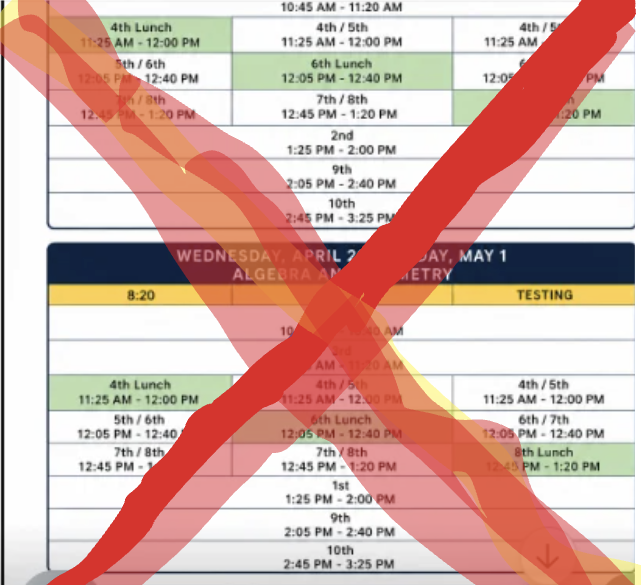
If our government does make DST the new ST, the change could affect us in several ways. For one, we will not have to worry about changing the clocks, but we will be going to school well before daylight during the winter.
The winter solstice is when the effects of a permanent DST adoption will be felt the most, with the first light not appearing until 8:17 am, and sunrise not occurring until 8:49.
An interesting impact of implementing DST as standard time will be its impact on times for religious prayer.
It could create a challenge for observant Jews in particular. On the winter solstice, the time the sun would be visible 10.2 degrees below the horizon is 7:55 a.m., according to MyZmanim, a website that tracks times for Jewish prayer.
The significance of this is that Jews obligated in their 45-minute morning services will not be able to pray before this time, which will create a conflict with the school start time.
It could potentially lead to conflicts for religious Islamic students as well, but the Islamic prayer obligation of Salah calls for prayer five times a day, and some of these times already conflict with the school day.
Businesses and schools could eventually be rescheduled (regardless of what change), but this would be likely to take upwards of a decade.
Ultimately, we may as well keep changing the clocks rather than undergo changes, because shifting the clocks is useful for maximizing daylight at the 41st latitude, but if we stop changing the clocks biannually, we should use ST for biological reasons.