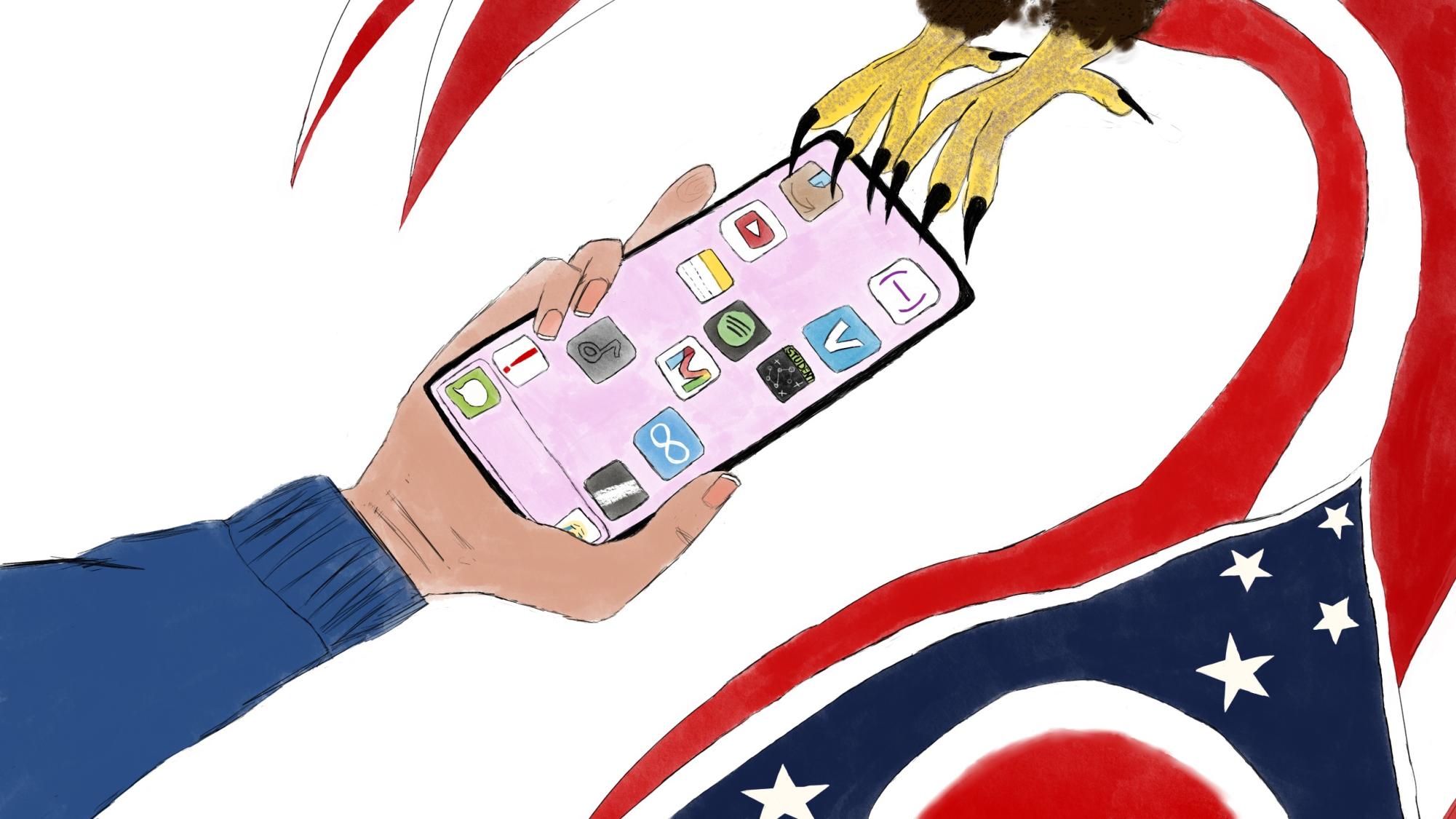
BHS hallways will look quite different in 2026 due to implementation of Ohio House Bill 96, which prohibits the use of cell phones and other personal devices during school hours.
Although this development has caused some strong negative reactions from teens, this decision was driven by the rising concerns regarding the impact of smartphones on attention span and mental health.
We believe these concerns are justified. As strict as it may seem, the new cell phone policy is actually coming from a really good place. There is significant research supporting the idea that cell phone use and social media have a negative impact on learning.
Teachers echo this concern, noting fractured attention spans and reduced classroom engagement. From this perspective, the state’s decision seems justified.
No one is pretending this transition will be easy. There will be a significant adjustment period. While the policy may improve student engagement and even force better connections among students, many will struggle with being disconnected all day and resisting the urge to check their phones.
Even as we recognize the long-term benefits, we are not looking forward to following these new rules.
We do have concerns about consistency and effectiveness of enforcement. The policy will only succeed if teachers and administrators are strict about keeping it up. Partial enforcement will not work. If enforcement is uneven, students will quickly test boundaries, undermining the policy’s purpose.
We also wonder whether banning phones alone will truly address the problem. Students using personal laptops can access almost everything on our phones. Personal laptops may end up functioning as replacements for cell phones rather than solutions to distraction.
While it is clear that phone use has a negative impact on learning, it is also fair to question whether the law goes too far. Is it really necessary to ban access during lunch and hallway time? Does this problem really warrant statewide legislation? This skepticism reflects a broader concern: whether the ban addresses symptoms rather than the deeper relationship students have with technology.
We remain cautiously optimistic. It seems likely that the policy will feel restrictive at first, but will
hopefully enhance attention spans, at least initially, leading to better classroom engagement and social interaction. Even those who dislike the change must admit that, over time, students may learn to adapt and find benefits in being more present with peers.
The success of BHS’s new cellphone policy will depend on consistent enforcement, thoughtful implementation and a willingness to revisit its impact, as Principal Paul Chase has promised.
While students may not welcome the change, many recognize that it has the potential to improve focus, relationships and mental well-being. Whether it becomes a positive turning point or a daily frustration will depend on how seriously both students and administrators commit to making it work.