
Drip… drip… drip…
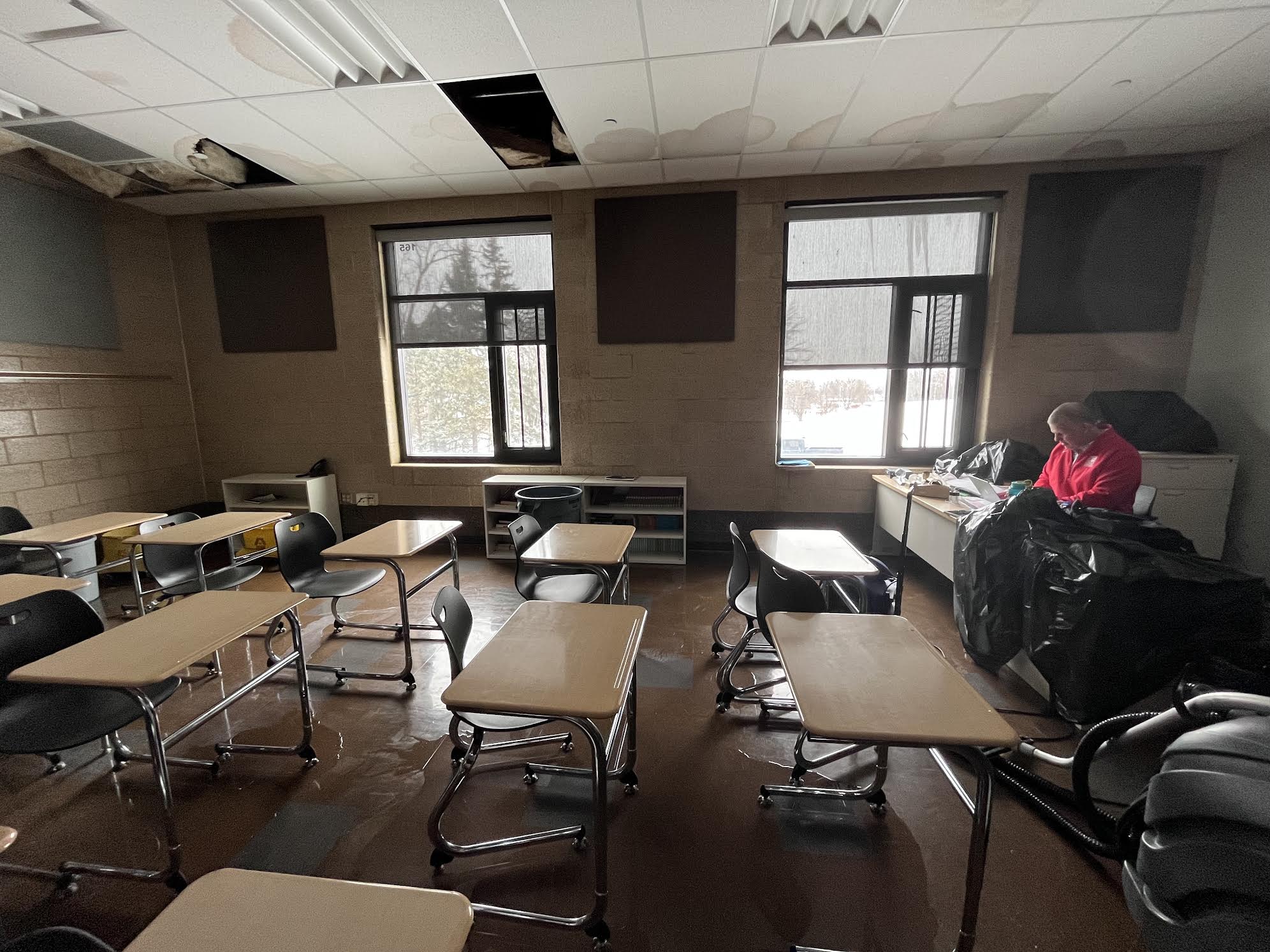
Mop buckets and trash cans were scattered Jan. 28 around classrooms in the 100 hallway, atrium and pool, attempting to contain numerous leaks that opened up over the snow-day-extended weekend.
The leaks continued dripping throughout that week and the next, damaging roof tiles and dripping water all over classroom tables and floors. Trash bags were strewn across desks to protect sensitive belongings, and water vacuums were brought in to remove puddles on floors, often several times a day.
The leaks, caused by ice dams on the 100-wing built in 2011-13, became much worse after the extreme weather this year, and school district officials plan to replace the roof in the next four years.
“Winter has been really, really hard on our roofs,” Beachwood’s Director of Operations Neil Bennet said. “They’ve leaked the last couple years that I’ve been here, but it’s to a whole new level now. We’re seeking replacements on those roofs some time in the next four years … The goal is to ultimately get the entire roof replaced.”
Students complained about how the leaks disrupted classroom learning.
“There was water actively dripping down in the back of the room, which was very distracting during class,” said AP English Literature student Lyndia Zheng. “And there was also a smell that came from the leaks.”
Classrooms were also filled with an almost burnt smell, most likely from wet insulation and roof tiles.
“For me, it’s not a musty smell, it’s like a burnt smell. It’s ironic,” said English teacher Evan Luzar, whose classroom was hit particularly hard by leaks. “There’s like a smell of rotten egg that was distracting for basically all of my classes.”
Bennet explained that the air quality in the rooms is currently safe following tests from Intertek PSI.
“Air quality testing was done in each room that experienced leaks,” Bennet said. “No evidence of elevated mold conditions, and no areas of concern with air quality. Everything was good.”
The smell dissipated with most leaks in the following two weeks, while roof tiles were replaced around a week later.
These leaks followed the Jan. 23-27 North American winter storm, which dumped over a foot of snow on Cuyahoga County and broke 150-year record low temperatures in Cleveland.
Bennet explained that the harsh conditions deteriorated BHS roofs particularly in English and social studies classrooms in the wing built in 2011-13.
“There [were leaks] in Mr. Alexander’s room, Mr. Baker’s, Mr. Velotta’s, Ms. Crossman’s, Mr. Luzar’s, Ms. Hamilton’s and the pool,” Bennet said.
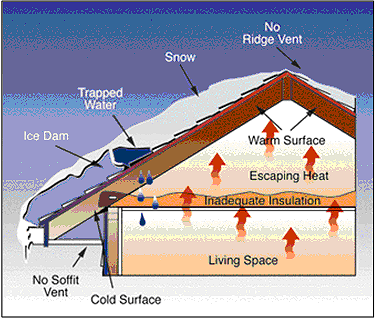
The cause of these leaks is an effect called “ice damming,” where melted snow refreezes on the colder edges of roofs, creating an ice dam that traps ice and water on roofs. This water and ice can eventually work its way under shingles after several freeze-thaw cycles.
“Ice damming is causing the leaks,” Bennet said. “It’s the exchange of hot air and cold air, and the ice forms underneath the shingles.”
Response by maintenance and service staff was quick and immediate, and as much damage was repaired as possible.
“I’m working as hard as I can to get everything prepared and/or replaced as fast as I can, because it’s important,” Bennet said. “As soon as weather permits the contractors to get up there, they’ll repair whatever they can repair, as well as maintenance going up there.“
“Mr. Bennet has been great. He’s super responsible,” Luzar said. “ Yeah, the maintenance staff are great. It’s like there is an instant response.“