
The current issue of the Beachcomber going to print this week will be its last.
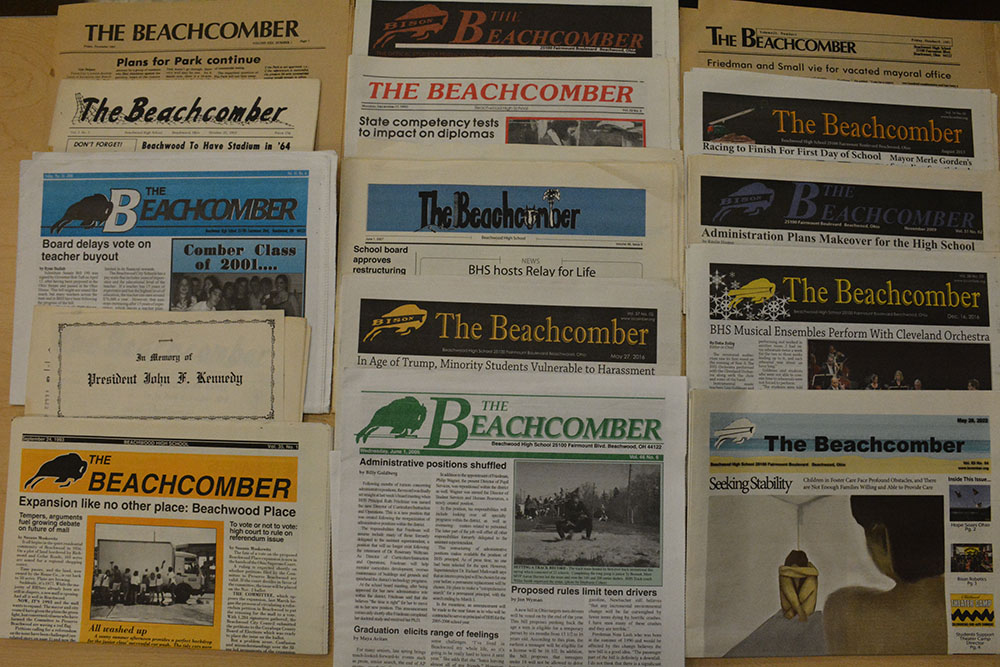
After 63 years of student-written, edited and produced newspapers, this publication is retiring its physical edition and pivoting toward a digital-only, multimedia future.
Beachcomber adviser Josh Davis describes what the future of the publication could look like in the next few years.
“Our plan is to discontinue the print publication, sadly, and instead invest more time and energy and resources into increasing the amount and quality of the multimedia on the website,” Davis said. “[This means more] photo galleries, video and audio.”
The move represents a definitive shift in the school’s journalism curriculum, trading the print issue for podcasts and video production, trading the $3,500 annual printing budget toward $2,500 in new equipment, including a video camera, microphones and a mini-mixer. The goal is to produce high-quality photo galleries as well as edited video and audio content in order to better teach students about how to create news in a world that consumes news primarily on digital devices.
“The main reason is that if students are really going to go into journalism, they need to have more experience with [multimedia],” Davis said. “We need the equipment and I need to gain the skills so that I can teach them, because a professional journalist now isn’t just somebody writing the articles, but is having to do many jobs at once.”
This decision was also driven by a lack of student interest in putting in the long hours required to create the print issue.
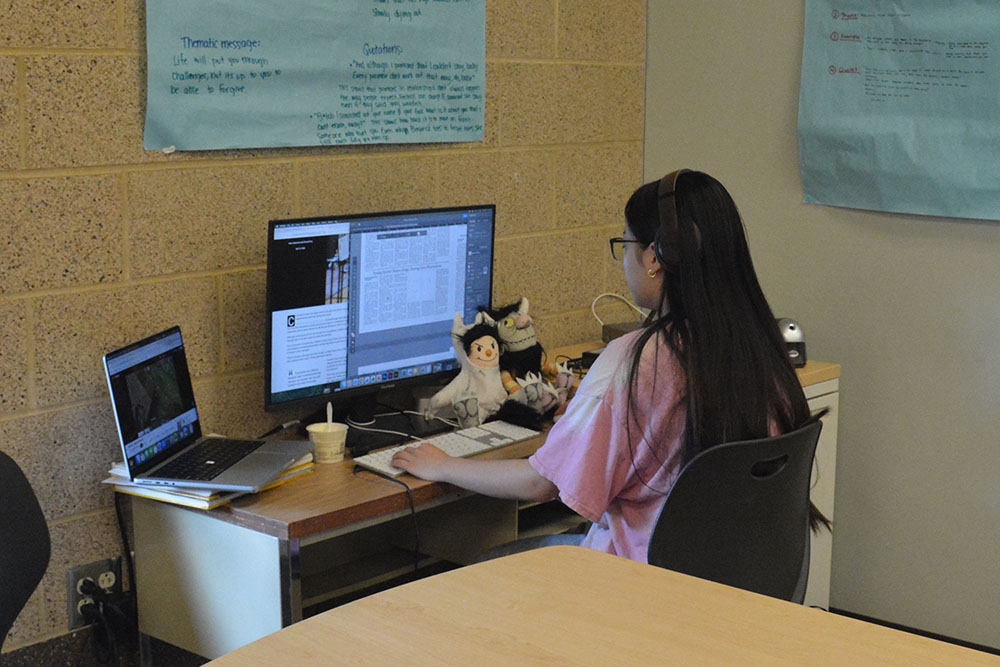
Senior Lyndia Zheng, the publication’s current editor-in-chief, has served as the sole layout editor for the past three years, primarily responsible for the creation and editing of the print. With her graduation approaching, the Beachcomber has struggled to find new talent to take her place.
“I make up the entirety of the Beachcomber’s layout team, and I do not, unfortunately, have a protégé,” Zheng said. “After we discussed it with the future editor candidates, we are looking at completely cutting our print and switching over to a completely online publication.”
This change has sparked mixed feelings among all those who work on the paper, from the adviser to the editors to those who take the journalism class.
“I am genuinely devastated, because the [physical] Beachcomber is a good way to not just influence the high school, but the whole community,” said junior Luke Warner, currently a staff writer in the journalism class.”
“My friends and I would drive to different places in the community and pass out the papers. The workers and the owners of establishments would be happy to see us because they were getting new information about the city,” Warner said. “No longer will that happen.”
Warner added that the paper has a unique ability to connect with older generations, who often prefer a physical paper rather than just a website.
“I want to read a paper. And so do my elders down at the JCC working out. They just want to grab the paper and read it,” Warner said. “They don’t want to search up a website, and go to the wrong one by accident. And, the newspaper is a very fleeting thing right now … My family just canceled their Plain Dealer. They just don’t want to get it anymore.”
Zheng also acknowledged the general trend of journalism shifting away from physical print.
“The journalism field has always been a very dynamic industry, but specifically with the advent of short-form content and the increase in popularity of people getting their news from social media and from online instead of print,” Zheng said. “I think we’re just trying to follow in the footsteps of larger media publications and a lot of local publications that have increasingly gotten rid of their print editions and gone fully online.”
For Davis, who has seen the publication evolve since he was hired in 2006, the change is bittersweet but necessary for the students’ professional futures.
“Doing both [the paper and multimedia] well is not tenable right now,” Davis said. “It’s sad to think that after 63 years the print issues are going to dry up. I hope they do return, but the source of where most people get content now is mostly digital.”