

IT: Welcome to Derry is a prequel series to Stephen King’s novel IT. The book is about seven kids who are terrorized by an evil entity that exploits its victims’ fears to disguise itself while hunting them.
The series first premiered as a weekly show on HBO Max on Oct. 26 and concluded on Dec. 14 with eight hour-long episodes.
The book was first turned into a miniseries in 1990 by director Tommy Lee Wallace. It was later modernized in 2017 (IT) and 2019 (IT Chapter Two) under Andy Muschietti’s adaptation, which follows seven young outcasts in Derry, Maine, who are about to face their worst nightmare, an ancient, shape-shifting evil that emerges from the sewer every 27 years to prey on the town’s children.
Banding together over the course of one horrifying summer, the friends, Bill Denbrough, Beverly Marsh, Ben Hanscom, Richie Tozier, Eddie Kaspbrak, Stan Uris, and Mike Hanlon, must overcome their own fears to battle the murderous, bloodthirsty clown known as Pennywise.
The kids are all outcasts in the town of Derry. Bill is bullied because of his speech impediment, Beverly because of the rumors spread about her, Ben for being an overweight nerd, Richie for his glasses, Eddie for being a germaphobe, Stan due to his religion, and Mike because of his skin color.
While the previous films focused on the Losers’ Club and their confrontation with the clown, Welcome to Derry shifts the perspective, exploring the town’s deeper history. Season one of IT: Welcome to Derry takes place in 1962, 27 years before the events of the original IT movie (2017), which is set in 1989.
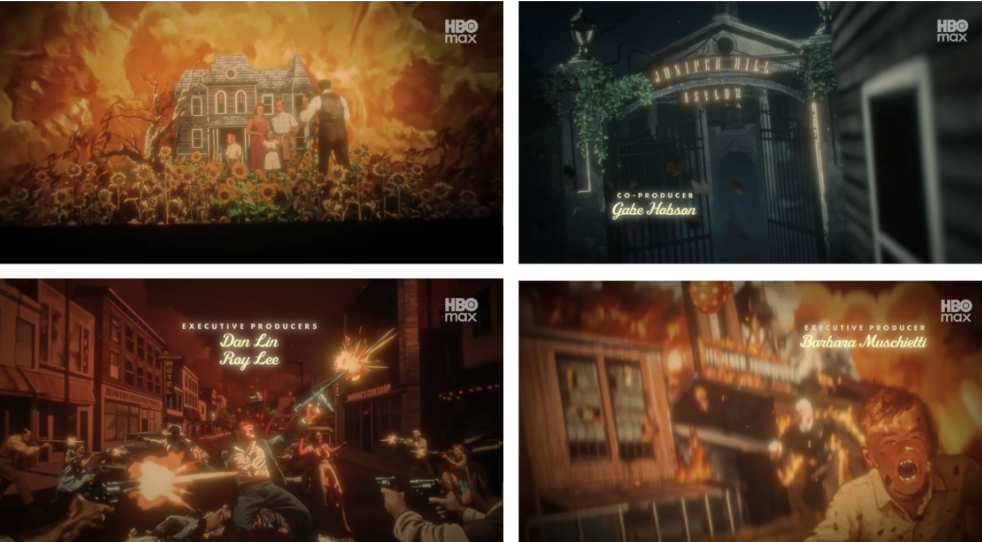
The opening credits of IT: Welcome to Derry sets a chilling tone by highlighting a series of horrific historical events and Easter eggs, drawn from Stephen King’s IT, including The Paul Bunyan statue, the “red love bridge,” the 1935 Bradley Gang Massacre, the 1908 Kitchener Ironworks explosion that killed 102 people and 88 children during an easter egg hunt and references to Juniper Hill Asylum, where adult Henry Bowers is eventually confined (IT Chapter Two) as well as the infamous well house of 29 Neilbolt Street.
The background music, “A Smile and A Ribbon,” carries the unsettling lyric, “The louder I say I’m happy, the more I believe it’s so,” reinforcing the series’ motif of a facade of happiness masking a darker reality.
By presenting these events, the opening sequence establishes that IT: Welcome to Derry will delve into the town’s dark history and the tragedies that preceded the Losers’ Club’s battle with Pennywise.
Episode 1: The Pilot introduces Matty Clements, a boy who mysteriously disappears, prompting Lilly Bainbridge, Ronnie Grogan and other kids to investigate.
Their search leads them to a movie theater where a terrifying confrontation unfolds: Matty appears on the movie screen holding the demonic baby, which transforms and attacks and kills Teddy Uris, Phil Malkin and Susie Malkin, leaving only Lilly and Ronnie alive.
The first episode establishes the brutal, unforgiving nature of Derry, where fear manifests in supernatural ways and innocence is lost.
Episode 2, The Thing in the Dark, explores the aftermath, focusing on the military’s secret “Operation Precept,” led by Leroy Hanlon, a man who cannot feel fear and who investigates fear as a weapon.
Ronnie experiences nightmarish visions involving her deceased mother and unsettling womb imagery, while Lilly faces hallucinations and pressure from authorities. She is ultimately manipulated into framing Hank Grogan for the massacre.
The series expands Stephen King’s mythology, introducing connections to Derry’s dark history, the Bradley Gang (1935), and cosmic elements like Maturin (turtle), blending horror, trauma, and the sinister idea that fear itself can be controlled.
The show’s Easter eggs reward fans familiar with King’s universe, establishing a world where no character is truly safe.
Episode 3: Now You See It begins with a flashback to 1908, showing young Francis Shaw encountering a terrifying creature at a carnival. Meanwhile, Rose (a native of the Shokopiwah tribe) uses a slingshot to wound it, hinting at its vulnerability.
In 1962, Dick Hallorann is enlisted by General Shaw for a psychic mission, and, using the slingshot as a focus, experiences a harrowing vision in Derry’s sewers, seeing Pennywise, floating corpses, and warlike imagery, nearly falling from a plane before Leroy Hanlon saves him.
Meanwhile, Lilly, Ronnie, Will and Rich conduct a graveyard ritual, capturing a blurry photo that appears to show a clown, strongly implying Pennywise’s presence. The episode also teems with Stephen King Easter eggs: references to Maturin the cosmic turtle, the slingshot from the Losers’ Club, and mention of the Bradley Gang.
Overall, Episode 3 intensifies the horror by linking Derry’s past to the present, revealing Pennywise’s growing threat and highlighting the recurring motifs of fear, trauma and the cyclical nature of evil.
Episode 4: The Great Swirling Apparatus of Our Planet’s Function delivers the show’s most ominous and revealing hour yet, blending cosmic horror, social tension and raw emotional stakes into a tightly-wound chapter.
The episode’s strength lies in how it escalates the children’s fear while simultaneously widening the scope of the mythology, pulling back the curtain on Pennywise’s possible origins through the Galloo legend.
Lilly’s desperation, from trying to reason with Chief Bowers to proposing anti-anxiety pills as a shield against fear, highlights how powerless the kids feel, yet how determined they are to fight.
Marge’s grotesque hallucination and Will’s harrowing vision of his burned father underline the series’s willingness to lean into body horror and psychological dread, using fear not just as a theme but as a literal fuel for the monster.
Charlotte’s advocacy for Hank collides with the town’s racial dynamics, and Hallorann’s psychic deep-dive uncovers a chilling origin myth involving a fallen star and 13 sacred shards.
Episode 5, 29 Neibolt Street, stands out as one of the most intense and memorable episodes of the season.
The episode’s greatest strength is its atmosphere. From the moment the U.S. Air Force enters the house, there is an overwhelming sense of dread. The structure feels alive, with warped hallways, decaying rooms, and disturbing hallucinations that reflect the characters’ fears. Instead of relying on jump scares, the episode builds slow, psychological tension, making every scene inside the house feel dangerous.
Character development is pushed forward in meaningful ways. Lilly continues to emerge as the emotional core of the group, burdened by guilt and a sense of responsibility. Pennywise cruelly exploits Ronnie’s unresolved grief, while Will and Rich confront visions tied to loss and helplessness.
Pennywise’s limited but powerful appearance makes him even more terrifying, signaling that he is no longer lurking in the shadows but actively hunting. By the end of the episode, survival feels temporary, reinforcing the idea that evil in the town of Derry is persistent and patient.
Seeing Pennywise for the first time in the series was breathtaking. The build-up to the big reveal was worth the wait. His reveal only amplifies his terror. He doesn’t need constant screen time to dominate the episode. Instead, he lurks just beneath the surface, reminding both the characters and the audience that he is always in control.
By the end of the episode, survival feels temporary, reinforcing the idea that evil in Derry is persistent, patient, and far from defeated. Episode 5 proves that Pennywise is no longer hiding in the shadows but is actively hunting, and the true horror is only beginning.
Episode 6, In The Name Of The Father, deepens the psychological and emotional consequences of the Neibolt Street encounter. Rather than focusing solely on action, the episode explores how fear lingers and evolves after confrontation. Pennywise becomes more manipulative, appearing less as a physical monster and more as a psychological force that invades daily life.
The episode emphasizes paranoia and isolation, showing how the characters struggle to trust their own perceptions, like Lilly. Pennywise’s ability to exploit personal trauma is at the forefront, reinforcing the idea that fear itself is his greatest weapon. This slower pacing works in the episode’s favor, allowing tension to simmer and reminding viewers that Pennywise does not need constant violence to remain terrifying.
Episode 7, The Black Spot was the episode all viewers were looking for. The series revolved around a historical event which occurred in Derry in 1962, the Infamous Black Spot Fire took the lives of 23 people, including 17 airmen and other pupils present. The Black Spot was a Safe Haven for African American military personnel, with racism consuming the town as a whole.
The Episode starts dramatically with a standoff with the Airmen and the hate group, guns pointed at everyone’s heads. Although we knew the Black Spot fire was bound to happen, we all wondered how. The airmen were locked into the building while the Derry townsmen threw Molotovs and shot anyone who tried to escape. Among the many dead was Richard Santos; his death was not only tragic but also heroic.
It was revealed that Ingrid Kersh set this tragedy up to lure the evil entity in, believing that Pennywise was her dad. After the Black Spot fire, claiming many lives, Pennywise returns to his 27-year slumber.
This incident also reveals General Shaw’s motives with the entity to release fear not only to the Soviet Union but also into the United States.
This episode succeeds because it does not shy away from uncomfortable truths. It presents fear as both a supernatural force and a physical one, making Pennywise feel less like an isolated monster and more like a reflection of Derry’s darkest impulses and the town’s evil as a whole. Richard Santos’ death showed that no character is truly safe.
Episode 8, Winter Fire, was a chilling and emotionally charged conclusion to the first season. As the military disturbs Pennywise from his slumber, he is awoken. Pennywise is ready to wreak havoc on the town of Derry once more by creating a great fog that takes over the town.
Chaos immediately arises, and Pennywise goes straight to Derry High School to have a feast once more. As the students gather for the announcement, Pennywise appears and takes the children using the Dead Lights.
Lilly, Ronnie and Marge gather to stop the evil entity from taking everyone, including their friend Will Hanlon. The stakes are at an all-time high as the kids and the adults are manic. Leroy Hanlon, I believe, felt fear for the first time as his son was taken. Dick Hallorann becomes mentally unstable following the events of the black spot fire, haunted by the vision of the dead, and pondering taking his own life, showing the deep emotional cost of Pennywise’s return.
The episode later reveals that Pennywise perceives time differently and how he experiences all at the same time. This was shown when he mocked Marge by telling her that her son Richie Tozier and his friends would eventually bring him death in the future. Not only was this reveal amazing, but the attention to detail with the language used with Marge was a correlation to the language used with Richie in the 2017 IT film. Pennywise’s perception of time reinforces the idea that he is an entity unlike any other.
While Pennywise was distracted by Hallorann, the kids took the opportunity to seal Pennywise back, bringing him back to his slumber. With the power of Will, Lilly, Ronnie, Marge and the ghost of Rich, the losers were able to defeat Pennywise. The finale leaves a lingering sense of unease, reinforcing the evil that is the town of Derry and how the evil cannot fully be destroyed.
Overall, the HBO Original was an exciting series to say the least. The series scored an 8/10 on IMDb and a 81% on Rotten Tomatoes. Andy Muschietti does a phenomenal job, especially with how carefully he balances new material with the familiar terror of Stephen King’s universe.
The attention to detail, from subtle references to major Easter eggs, makes the world of Derry feel richer and more interconnected with King’s other works.
Even the opening credits, “A Smile and a Ribbon,” are not only catchy but also set an eerie and unsettling tone that perfectly matches the series’ themes of hidden evil in the town of Derry.
Altogether, IT: Welcome to Derry doesn’t just expand the mythology; it deepens it, promising a season that is both terrifying and fascinating to watch.