
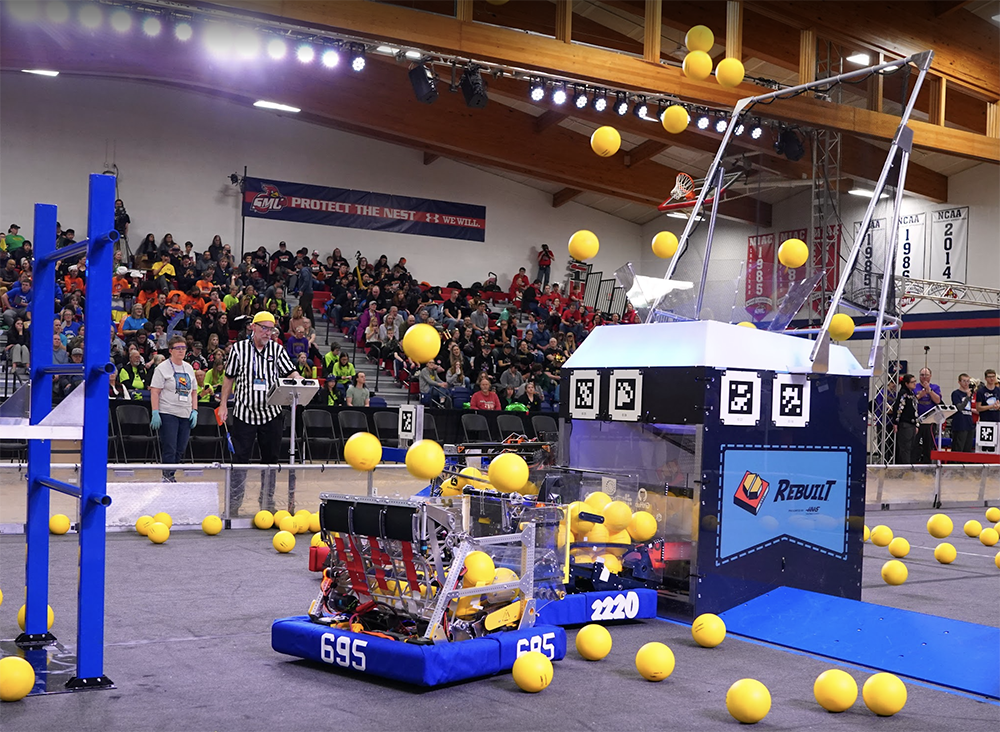
Beachwood’s robotics team 695 placed in the top ten overall in the first major competition of the season at the Bluff Country Regional in Winona, Minnesota on March 5-7.
Together with their alliance partners, the team advanced to the final round, where they lost to an alliance of teams from Illinois.
Competition at the event was particularly intense, especially considering it was at the beginning of the season and the team faced competitors ranked within the top 50 globally.
By attending an early competition out of state, the team gained an advantage that will carry them through the rest of the season.
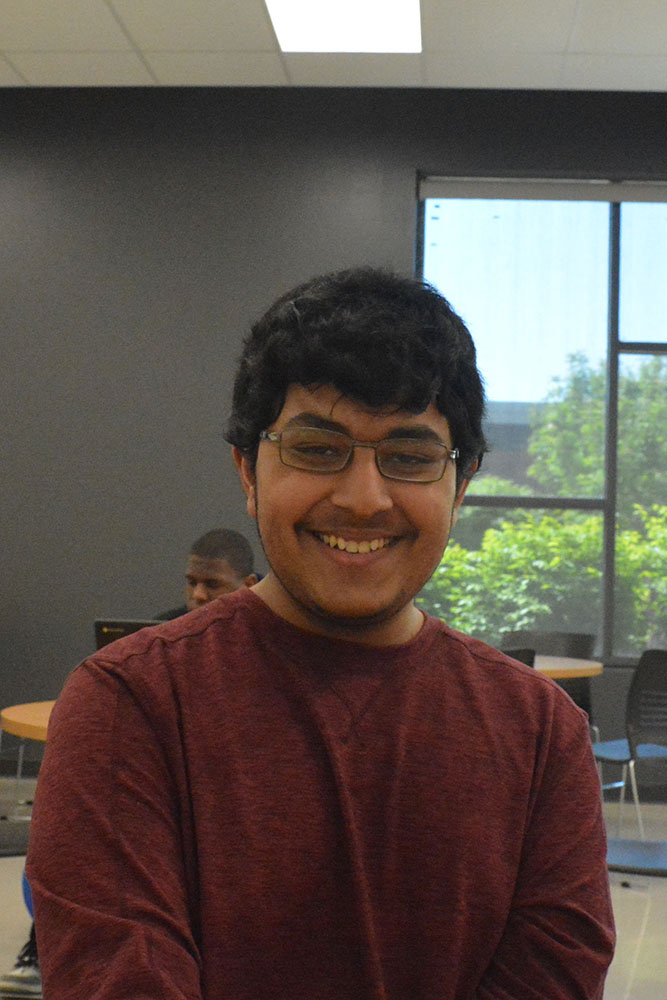
“We did significantly better at this year’s week one than we did at last year’s week three competition,” said software lead Nimisha Kasliwal.
Kasliwal is confident that the team’s experience at Bluff Country will give them a leg up as they fine tune their robot for the Buckeye Regional held at Cleveland State University, which starts today.
“This performance allowed us to find issues with the robot and gave us a clear path forward to succeed in our week three competition,” she said.
Entering the event, members had only just completed the robot’s mechanical build before shifting their focus to software programming.
With 40 students now involved and competition season underway, robotics team members say they operate more like a professional engineering firm than a typical student club.
From designing parts to debugging software under pressure, members say the experience mirrors real-world industry expectations and demands a level of commitment comparable to a varsity sport.
Driver and Design Lead Ben Keyerleber explained that the program’s structure and scale set it apart from most school activities.
“All team operations run out of an office space in Richmond Heights,” Keyerleber said. “This space is dedicated to machine fabrication, design, CAD and software testing.”
The team is part of the international FIRST Robotics Community, which challenges students to design, build and compete with industrial-scale robots. According to the FIRST website, students gain hands-on engineering experience while working in collaborative, deadline-driven environments similar to those found in technology and manufacturing fields.
Keyerleber’s involvement began long before high school.
“My family was very involved with robotics prior to my eligibility for participation,” he said. “Given that FIRST robotics includes age-appropriate challenges at multiple levels, I stuck with the program, building LEGO robots in middle school [all the way to] machine manufacturing complex industry-standard projects.”
Despite the technical nature of robotics, students say prior experience is not required to join. The team offers training that helps new members learn specialized skills and find a role that fits their interests.
“The team is very inclusive and has an in-depth off-season training program dedicated to students learning the [necessary] tools,” Keyerleber said. “This allows them to diversify into one of four fields: software, design and CAD, fabrication or scouting. It is possible for anyone, regardless of tenure, to have a meaningful contribution to the robot.”
Team members say the experience extends beyond building machines. The program emphasizes professional collaboration, project management and skills often taught in college or industry settings.
“The most valuable part of the robotics team is gaining firsthand experience with professional workflows,” Keyerleber said. “Our season mirrors a real-world corporate environment, where subteams collaborate through design reviews, iterative prototyping and rigorous software debugging within a standard engineering design cycle.”
Senior Karina Krishnan said that the environment becomes especially intense during competitions, where preparation meets real-time performance.
“Serving on the pit crew means embracing controlled chaos, troubleshooting and repairing the robot under tight time constraints, while scouting requires focus and strategic thinking in a less hectic environment,” Krishnan said. “When a match is close, or it’s the finals, the energy is unforgettable.”
For Krishnan, the most rewarding moments come when months of work finally pay off.
“After dedicating countless hours in the off-season to sharpening our skills and spending the season designing and building our robot, the most rewarding moment comes during competition,” she said. “Watching a subsystem I helped design perform reliably and effectively makes all the hard work worthwhile.”
One of Krishnan’s favorite moments came when the team qualified for the world championship last year.
“Going to [the world championship] in Houston and being able to meet people from teams all around the world was an extremely fun and memorable moment,” Krishnan said.
Robotics also shapes long-term academic and career goals.
“Robotics inspired me to pursue an engineering degree in my future studies,” Krishnan said.