
After returning from winter break on Jan. 6, Beachwood schools began implementing the full phone ban policy as required by the state of Ohio in the Ohio House Bill 96.
Before the break, phone use was only limited during instructional time, and students were required to put their phones in their pockets upon entering class. However, during passing periods and lunch periods, students were permitted to use their phones.
The new policy bans the use of phones, AirPods, Apple Watches and similar technologies entirely between the first bell at 8:20 a.m. and the last bell at 2:56 p.m.
Learning of the ban, students such as junior Ritika Iyer understood why it could be beneficial, but still had frustrations.
“I was kind of upset because I understood why teachers wouldn’t want us to use [our phones] during class, but the fact that we wouldn’t be able to use them at lunch, during study halls or in the library is frustrating,” she said.
In addition, she added that with AirPods being banned, being unable to listen to music during downtimes has been frustrating.
While students have expressed frustration at not being able to use wireless headphones, many have been able to work around it since wired headphones are still allowed, and the library has a supply of disposable wired headphones for students to use for class assignments.
Sophomore Rebecca Fishbach added that phones provided a break during the school day.
“I’m missing the break time because during lunch [and other down time], now I’m just working on my school work instead of texting my friends or getting a break,” she said.
While some students have frustrations, educators feel the phone ban was necessary.
“For kids, phones are an easy and accessible distraction,” social studies teacher Pam Crossman said. “Even putting them up in a mat or in a holder [was still a distraction because] if they used the restroom, they would have to grab their phone to sign out, and then they would take their phones with them.”
Principal Paul Chase had mixed feelings as the ban was first implemented.
“I was cautiously optimistic,” he said. “I feel like our students are really good people, and the majority of them are rule followers, and we have a strong community, and parents work together with us. So I felt cautiously optimistic that it was going to work.”
Assistant Principal Aubrei Watson reports that students have been doing an outstanding job complying with the ban so far.
Since returning from winter break, out of the 633 students, including Excel TECC students, only 46 have had devices confiscated.
“The students have done a really, really good job,” Chase said. “I’m just pleasantly surprised at how well it’s going.”
After getting used to the ban, Iyer feels that not a ton has changed in the classroom setting since phones were not previously allowed in class.
“My school days have been less overstimulating without having access to my phone because when I have access to it, I kind of feel like I need to use it more because I can, even if I don’t need to,” she said.
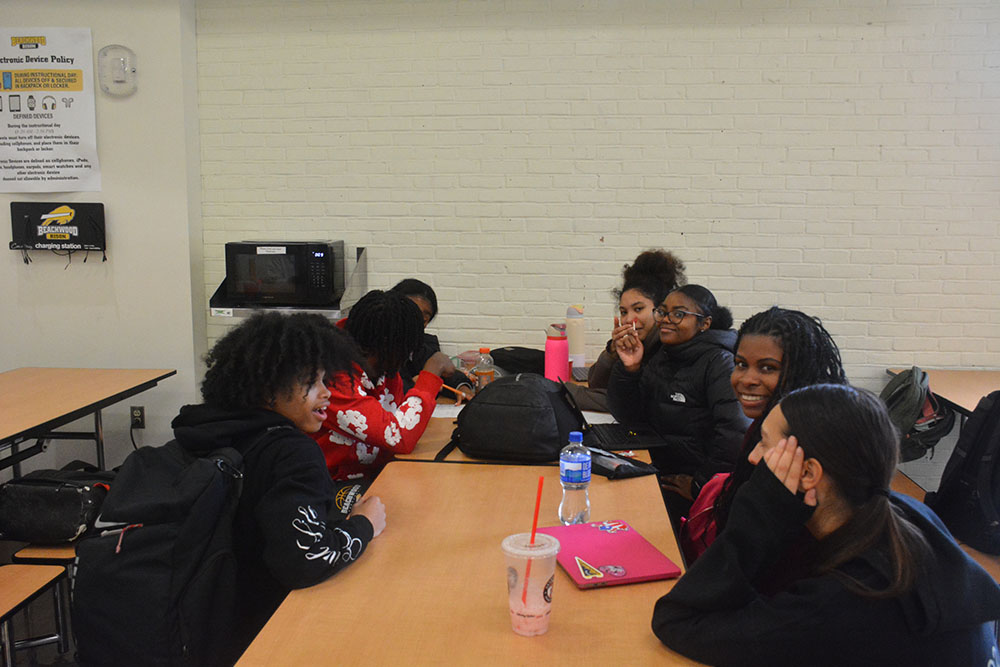
“During the day I feel like we talk more and converse more during lunch and study halls because we can’t have our phones,” she added.
Crossman agrees that the ban on cell phones has improved socializing between students.
“If we finish a few moments early, it used to be silent in the classroom because kids would take out their phones,” she said. “But now they can chat.”
There have been some negative effects of the ban noted by both students and teachers, but most have been fairly minor.
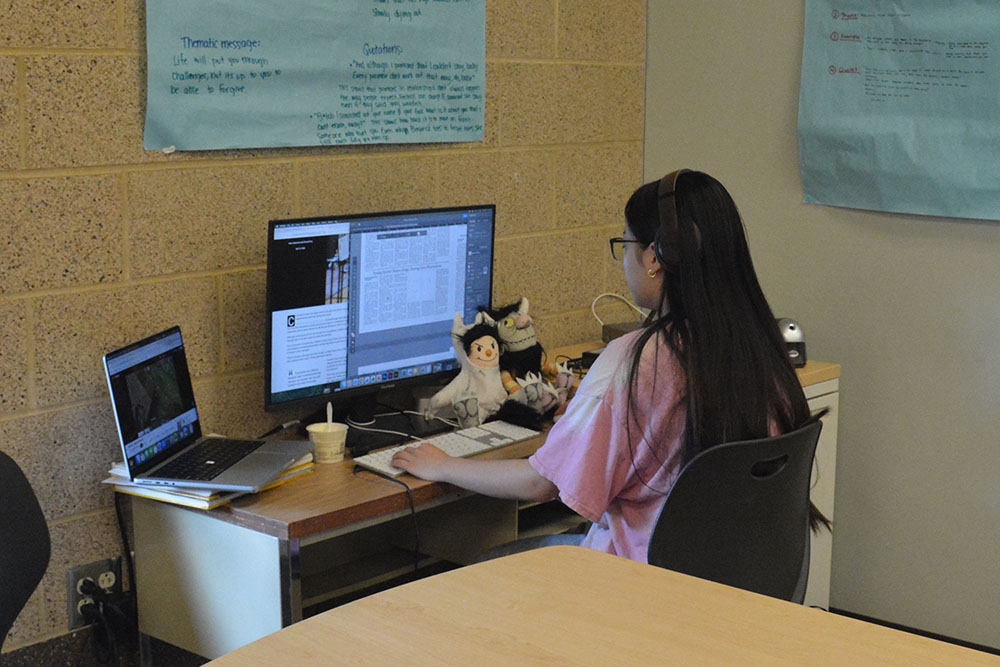
In some classes students and teachers found phones to be useful as instructional tools. The journalism class, for example, found phones particularly efficient for recording and transcribing interviews, so working without them has been an adjustment.
On the other hand, teachers such as Crossman point out that while phones may have been useful at times, anything that can be done on a phone can be done on a laptop as well, even if it may not be as efficient.
Secondly, Iyer shared that to her, one of the worst parts of the ban is not being able to contact her parents during the day.
“If your parents had to pick you up early in the middle of the day for something, or you needed to go somewhere, and let your parents know, or your parents need to call you about something, you wouldn’t be able to do any of that,” she said.
While this is frustrating, the school does have landline phones students can use to make calls from, and can permit students to go into a private room to take an important or emergency call. Students can also communicate with parents on their computers via email throughout the day.
Chase noted some other minor inconveniences that have arisen, including things like not having access to Apple Pay or credit card information to pay for lunches, items at the store, or not having phone numbers memorized when trying to make a call on a landline.
In these instances, Chase stated that as long as the student is trying to follow the rule, they will do their best to work with the student to get what they need done.
Overall, while the new ban has been an adjustment, and it hasn’t come entirely without frustration, the school has been doing a great job complying with the state law, and some benefits are already being seen.