

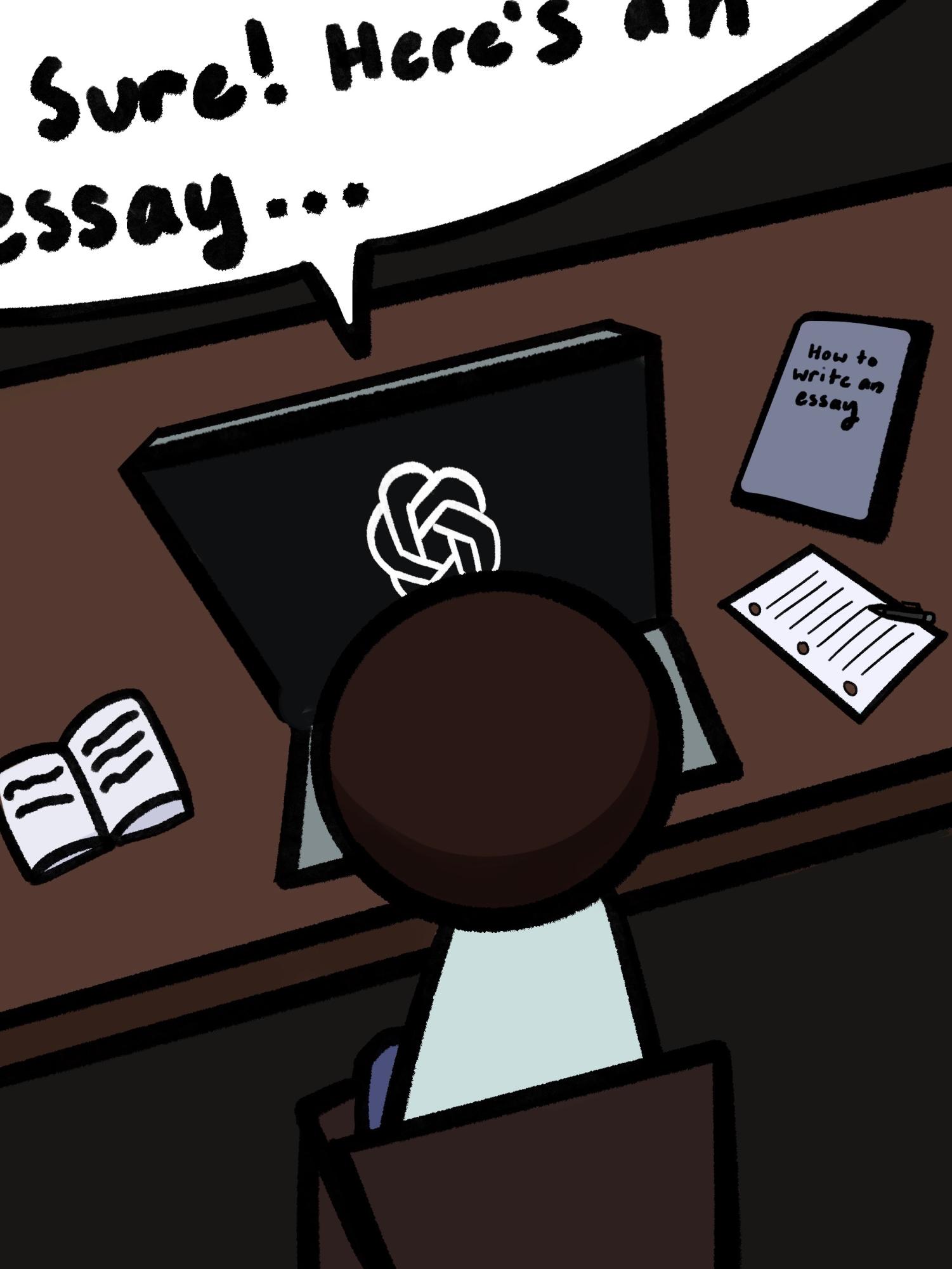
The Ohio budget bill signed by Governor DeWine on June 30 requires school districts to adopt artificial intelligence policies.
Ohio is reportedly the first state in the U.S. to require all K-12 public school districts to create and enforce policies for the use of artificial intelligence.
As per the bill’s language, the Ohio Department of Education and Workforce is mandated to create a model AI policy for schools by Dec. 31.
Senator Jon Husted teamed up with business leaders starting in late 2023 when he was Lieutenant Governor to make Ohio a leader in the use of AI in both business and education.
Husted facilitated forums across Ohio in major Ohio cities to promote AI and to warn of the “dangers” of leaving AI unattended.
Husted explained the importance of developing AI policies for education.
“AI technology is here to stay, and as a result, InnovateOhio took the lead on hosting forums over the summer to discuss the impacts,” he said. “The predominant request was educators wanting help implementing the technology in the classroom.”
Under Husted’s leadership, Ohio’s AI in Education Coalition ensures that K-12 educators will be prepared to lead the AI revolution.
The state of Ohio has published a multi-part toolkit providing guidance and resources for policy makers, teachers and parents to advance AI readiness in Ohio schools.
Husted advocates the use of the AI toolkit in educational settings.
“This toolkit is a resource for those who will prepare our students for success in an AI world, ” he said. “It continues our work to ensure Ohio is a leader in responding to the challenges and opportunities made possible by artificial intelligence.”
In addition, the budget bill mandates school districts to adopt an AI policy no later than July 1, 2026 by using the state’s model or creating their own.
Some schools, such as Lake Ridge Academy in North Ridgeville, a private school, developed AI policies as early as 2023.
Beachwood Schools’ Director of Educational Technology Jeremy Hunter explained that the school district is taking steps to develop an artificial intelligence policy that aligns with the new state mandate.
“[The district is] working with the Board of Education, legal counsel and Neola to approve the AI policy that will need to be in place prior to the end of the calendar year,” he wrote in an email.
Neola is a consulting company that helps school districts create and update policies to adhere to state and federal education laws.
Asst. Principal Aubrey Erkins feels that an AI literacy program is important.
She compared the implementation of an AI literacy program to the financial literacy class that is now a graduation requirement for high school students in Ohio.
“I think it could actually help,” she said. “It’s the same thing with having the financial literacy program because it’s beneficial to be literate with your finances as you leave here and become adults and have to manage all of those things in the real world.”
The U.S Department of Education has also urged school districts to prepare students for a world where Artificial Intelligence is becoming an increasingly common tool in both education and the larger economy.
As the debate to determine AI’s role in education continues to rage on, schools have started to explore how to guide students toward responsible use.
At the university level, The Ohio State University has already launched an “AI Fluency” initiative to train students and faculty to become responsible users of AI.
Starting with the undergraduate graduating class of 2029, all students must be “literate in AI”.
The initiative emphasizes the importance of understanding, questioning and innovating with AI tools as opposed to using them blindly as they prepare to lead in their respective fields.
Without such programs, schools are warned that they are risking leaving students unprepared for the “real world” and its AI-driven workforce. A Forbes article published in June 2025 notes that many employers now require their new hires to be able to use AI at work.
One way that Beachwood has tried to approach AI responsibility has been through the introduction of MagicSchool AI, an AI-powered platform designed to assist K-12 educators and students.
According to the product’s website, it also supports personalized learning tailored to diverse learning needs. Additionally, it’s secure and compliant, designed with student privacy in mind by adhering to educational privacy laws.
Additionally, the company claims to provide time-saving tools for educators to automate tasks such as planning lessons, creating assessments, providing feedback and assisting special education teachers with Individualized Education Plans.
Hunter explains what differentiates MagicSchool AI from other AI programs.
“MagicSchool is not a stand-alone AI Engine,” he wrote. “It uses multiple AI engines [and] ChatGPT is one of its AI engines.”
“MagicSchool is designed specifically for students, enhancing your learning experience while prioritizing safety,” he added. “It’s compliant with SB29, ensuring your personal information and educational history are secure.”
Ohio Senate Bill 29 (SB 29), passed in Oct. 2024, imposes new mandates on student data privacy and technology contracts. The law regulates how public schools and their technology distributors handle students’ personal information.
It clarifies ownership, affirming that all educational records collected by technology providers remain property of the school district; it limits device monitoring and safeguards educational records from unauthorized access.
Hunter further listed examples of the AI system’s advantages.
“MagicSchool AI is great for learning because it has special tools for making lesson plans and quizzes, and it matches school standards, so it fits what you’re learning,” he wrote. “It works in any language… It’s a powerful tool that makes learning easier and more fun!”
Hunter explained MagicSchool AI’s rollout to educators and students.
“Our initial rollout began as a soft launch in October 2024 with select staff members,” he wrote. “[On] Thursday, May 1, 2025, it was soft launched to students, so that by the end of the 24-25 school year, all K-12 teachers and students across the district had the opportunity to implement MagicSchool in their classrooms.”
Erkins says some Beachwood staff are already using MagicSchool AI.
“I hear great things, especially with the elementary and middle school… [from the] staff members as well, because they’re using it more,” she said. “I [personally use] it to [polish] recommendation letters and throw it through Magic School.”
Nationwide, the use of AI in classrooms continues to be controversial. Many critics want to keep AI out of classrooms entirely, but others argue that it is a tool that students should learn to use responsibly.
Assistant Professor Francisco Torres of Kent State University is extremely optimistic about the use of AI in education.
“AI is a great tool to use to help polish something you have written, search up information, or help you create activities for a class,” he wrote in an email. “AI, like [other technologies], is [just] a tool that those that are informed can use to better their craft.”
A U.S. Department of Education AI Report from 2023 emphasizes that AI can personalize instruction, help struggling students and reduce teacher workload so they can invest more time into their students.
According to the report, AI has proven to be extremely useful in giving teachers more individualized instruction time with students as a result of automated grading, basic lesson planning and simple administrative tasks being easily completed through a few simple clicks.
Another finding is that AI in itself is not a problem. Like any tool, it is dependent on how an individual uses it. When students and teachers use AI responsibly, it too is a skill that can improve productivity and hone problem-solving skills.
Math teacher Liuyi Liu has found AI to be helpful in her lesson planning and in finding effective methods to engage her students in learning math.
“Instead of boring notes, [if] I want something a little bit more exciting for students to be engaged with, I [might] ask ChatGPT for ideas,” she said. “I can ask ChatGPT to refine [something] for me, to make it better, or to perfect it for me [when it comes to teaching specific topics].”
However, educators are also concerned about the impact of AI on student learning.
A recent study suggests that overreliance on artificial intelligence may weaken students’ abilities to think critically and independently.
In a 2024 study, University of Pennsylvania researchers concluded that students using ChatGPT to complete school work performed worse on follow-up tests than peers who worked without it. Kids who used AI as a crutch remembered less material and struggled more when tested on their recall.
When students directly copied AI responses, researchers concluded that students skipped the process of struggling through material and learning from their mistakes, as struggling is part of what helps students retain information in long-term memory.
Students who use AI mindlessly, simply copying and pasting results or following steps blindly miss out on pattern recognition and or understanding complex problems.
“You lose that ability to be creative [and] come up with ideas on your own,” said Gregory Murphy, Beachwood Schools’ Director of Communications. “You lose that human element.”
English teacher Todd Butler does use AI to help with some day-to-day tasks and for limited organizational tasks such as creating scoring rubrics for assignments, which he then edits afterwards; however, he also takes note of its negative effects on students’ abilities to think critically for themselves.
“I think that the trend of lower grades is actually occurring more, as students are not really carefully checking [how much] they are using AI,” Butler said. “It’s almost waging a war on critical thinking [and] creative thinking. If we rely on artificial intelligence to do our thinking for us, then we start to lose [those basic skills that make us human].”
Students are divided when it comes to whether AI helps or hinders their learning.
One student, who does not want to be identified, admits to using AI on school assignments.
“I use AI on my homework,” they said. “I try not to use it to cheat, but more so to explain a concept to me.”
The student justifies the use of AI in schoolwork.
“If I search something on Google, it will give me a ton of answers and it’s hard to find one,” they said. “Whereas AI will explain a topic directly to me.”
Some students, such as senior Lauren Nagy-Oleski, are skeptical of the accuracy of AI-generated information.
“I use [some form of AI] in place of Google because I just get faster [and more direct] answers,” she said. “[However, it’s unreliable because] you have to go back and fact-check [its answers].”
“[AI] sometimes does help, but other times, the answers that it gives just don’t make sense,” junior Alma Saltzman said. “People [learn to] rely on AI instead of doing things on their own.”
Saltzman acknowledges that some students use AI to cheat.
“[People are wary when it comes to using] AI because they know the punishments that come because of that,” she said. “But I definitely think a lot of people use [AI] to [supplement existing work], which [allows some people to get away with] better scores if they’re not caught.”
Research conducted by the University of San Diego Legal Research Center found that tools designed to combat the use of academic dishonesty when it comes to AI are ineffective. Informed and knowledgeable students can easily bypass AI detectors by changing certain key-words.
“Individuals are able to circumvent AI detection tools by simply paraphrasing, inserting emotion or anecdotes, increasing word or structure diversity, or simply using other AI tools to add human-like elements to their writing,” wrote the researchers.
Cat Casey, a member of the New York State Bar AI Task Force, is cited in the study.
“I could pass any generative AI detector by simply engineering prompts in such a way that it creates the fallibility or the lack of pattern in human language,” she said.
AI does bring many concerns ranging from its environmental footprint to human-like intellectual capabilities, intellectual property theft and the risk of job loss.
Larger AI systems contribute to carbon emissions by using massive amounts of energy during training and operation as well as a significant amount of energy and water for cooling. Additionally, a single ChatGPT query consumes about five times more electricity than a simple web search, according to MIT News.
According to an article published by the New York Times, AI does lie to humans. AI doesn’t lie often, but it lies enough times to be a cause for concern. AI can be manipulated in ways similar to the way that people can.
Intellectual property is also a major concern.
The New York Times and other publishers are suing OpenAI for scraping the Internet for previously published articles without compensation in order to train their AI models.
Hollywood studios and talent agencies also seem likely to sue Open AI over its Sora 2 tool, which allows users to make AI-generated videos without compensating the original content creators.
Open AI has responded that their use of intellectual property to train AI models is protected by fair use under copyright law and is necessary for innovation.
The U.S. Copyright Office states that works created by human authors are the only works that can receive copyright protection. If a work is entirely generated by AI, it cannot receive copyright protection. The copyright law is not meant to protect machine outputs, but protect human creativity and expression. This leaves AI created works entirely in the public domain.
Many are also worried about job loss, but a recent report from Goldman Sachs suggests those concerns are overstated, and only 2.5% of the population could be at risk of job loss.
“Despite concerns about widespread job losses, AI adoption is expected to have only a modest and relatively temporary impact on employment levels,” the report found.
An opinion piece published by 180 Engineering argues that AI can’t replace people, but it’s possible that your employer will replace you with someone more adept at using AI.