

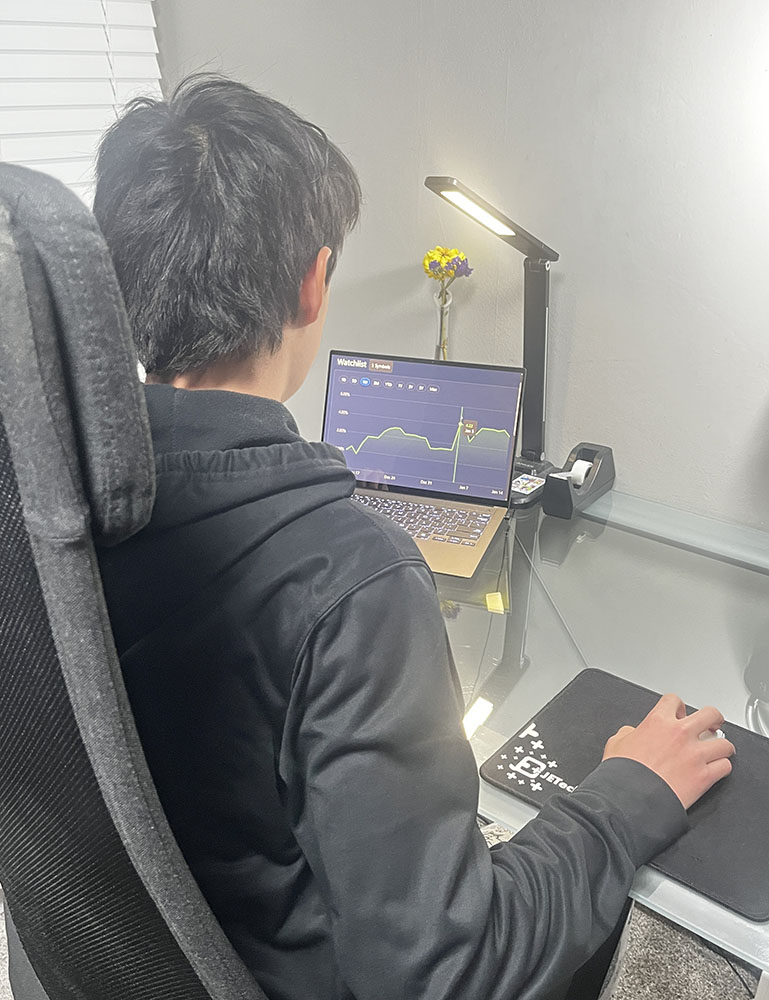
Over 1 in 5 teens, through their own youth-specific brokerage accounts, have started investing before turning 18.
With a stock market set to reach all-time highs, students across the nation are eager to cash in on the momentum.
At BHS, the trade culture is alive and strong. Owing to resources including financial literacy classes, the stock market club—which educates and fosters a supportive community of student investors—and teenage access to trading software, the conditions are better than ever for BHS students to start investing.
Whether through family members or social media, the next generation has not only introduced themselves to investing for the future but also taken to heart and experienced how risk, reward, and responsibility translate to financial wellness and a higher net worth.
Freshman Kevin Fu had his first encounter with trading way back in sixth grade.
“I got into investing when I first randomly stumbled onto a YouTube video called ‘The 3.5 BEST Index Funds That Will Make You RICH!’ by Mark Tilbury,” said Fu, who over just three years gained a penchant for the stock market.
A fellow young investor, sophomore Felix Ream, immersed himself in the world of investing for the positive outlook it has for young shareholders like himself.
“My dad got me into [trading] and showed me what it can do for you… growing your assets as you age to set you up for success throughout your entire life,” Ream said.
Ream is a prudent trader and sticks to the stocks he knows best.
“I see that there are risks to investing… all losses are just a lesson to me to learn how to manage my money better,” he said. “I invest in mostly tech stocks… I also invest in brands that I am familiar with… [because I believe] they will do well.”
One critical choice is not just the trade itself, but also the platform by which trades are actually made. Fu noted the impact that broker platforms such as Fidelity and Charles Schwab can have on encouraging financial activity.
“I [initially] used Robinhood because it’s really beginner-friendly… [but now] I use Fidelity because it has more detailed charts that are usually designed for people with more experience with investing,” Fu said.
For others, a hard-to-access platform has meant a less accessible portfolio.
Fu, like Ream, adopted a moderately risk-averse trading strategy. However, unlike Ream, Fu took the more distinct approach of explicitly spreading his investments out with the intent to mitigate risk in his portfolio.
“There will always be risk in investing,” Fu said. “However, I believe that if you invest in an index fund or any stock that is already well established, there will be significantly less risk involved… I would never invest in a penny stock, because to me, that is considered a form of gambling.”
The SEC defines penny stocks as “low-priced shares of small companies.” These investments are inherently risky.
Rather than trading in highly volatile stocks, most students prefer to trade in stocks they can thoroughly review and know well.
While BHS traders do lean into targeted investments, a notable number of others have embraced trading solely in a particular sector—crypto, where nearly 20% of Gen Z has placed their bets.
Despite the propensity some in his generation may have for crypto-trading, Ream prefers to invest more logically in blue chip stocks.
“Google has tools for essentially every aspect of life… Nvidia’s chips, along with Intel and other tech products, are very important for a growing tech world… [and] Tesla continues to be a leader in many different areas such as EVs,” he said.
Fu emphasizes the importance of patience.
“The more you watch the pot, the slower it boils… Start small and focus on learning, not getting rich quick,” he said. “…Never invest money you can’t afford to lose.”
As students realize more and more the benefits of investing early—valuable exposure to the stock market, saving young, and growing as an investor—they continue to pave the way for a future where financial literacy makes a positive difference in their lives.


![“I’m often asked, are you glad you left the corporate world to go into teaching? [The answer is] yes," Kaminski said.](https://bcomber.org/wp-content/uploads/2026/05/DSC_6236-1200x800.jpg)