
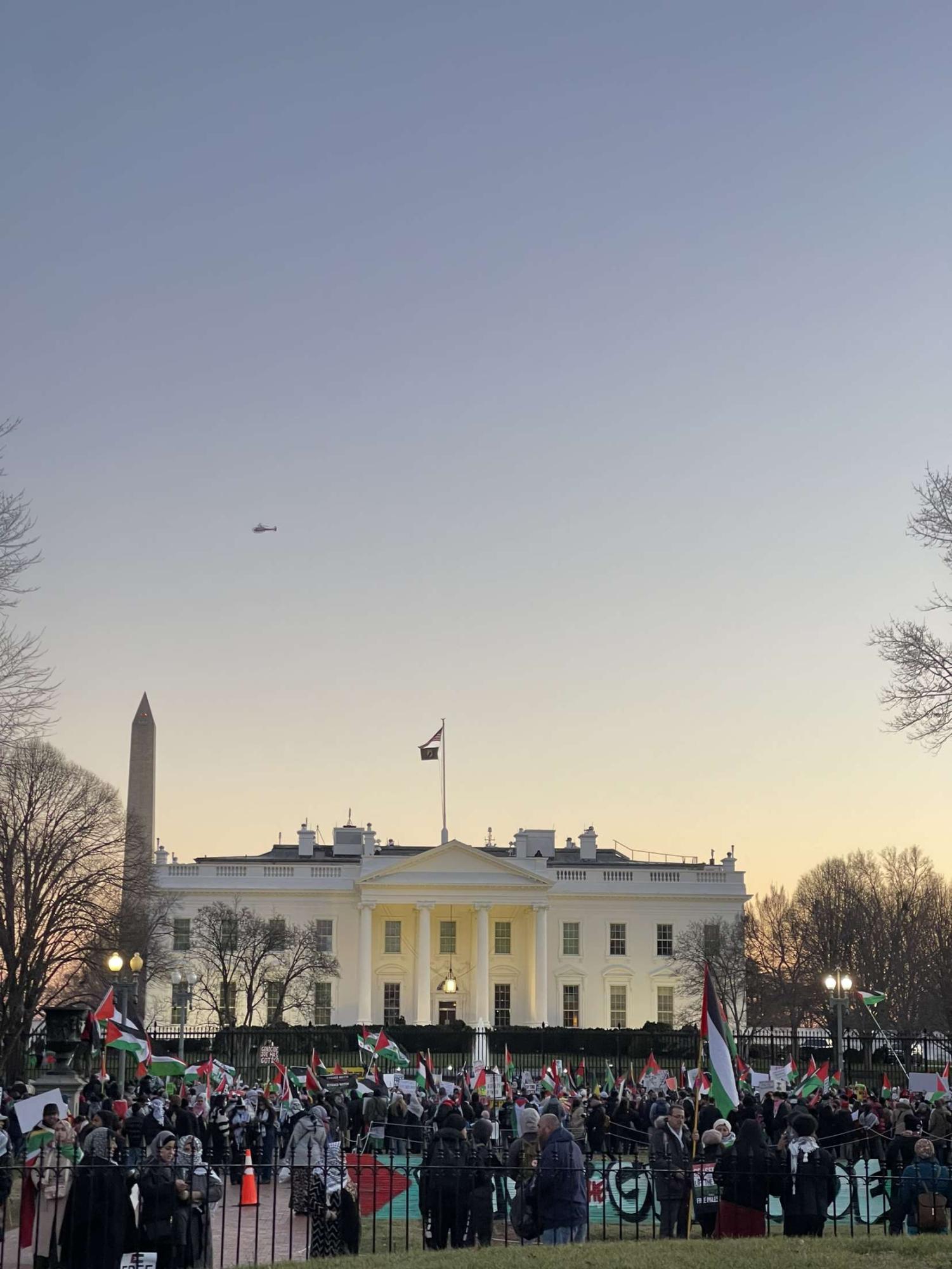
Drones buzz, rockets flare and buildings crumble.
In Gaza, the only constant for over two years has been destruction as homes fall, aid falters and lives are upended. Home to roughly 2.1 million people, it is one of the most densely populated regions in the world.
In recent years, it has also become one of the most bombarded. For decades, the oppression of Palestinians in Gaza was underrepresented in political conversations. However, the Israel-Hamas war has placed Gaza at the center of global politics.
Many Beachwood students have been impacted by the conflict, and those interviewed hope to see a lasting end to the war and the suffering of Palestinian civilians.
The war began on Oct. 7, 2023, when Hamas, the Gaza strip’s main governing body, led a horrifying act of terrorism in response to Israel’s blockade of the region, sending hundreds of militants beyond the Israeli-Gaza wall.
Hamas militants wreaked havoc on the surrounding areas, killing approximately 1200 people and taking 254 hostages. In response, Israel launched large-scale military operations in Gaza, claiming the attacks were necessary to protect citizens and neutralize threats from Hamas.
The international community reacted with urgency. The UN, many human rights organizations, and world leaders condemned the rising civilian death toll and called multiple times for a ceasefire, warning that the war was creating one of the largest humanitarian crises in the world. But the conflict has dragged on for over two years.
On Oct. 9, 2025 a temporary ceasefire was announced, offering a brief pause in hostilities that had been raging for nearly two years. While intended to allow humanitarian aid into Gaza and provide a momentary respite for civilians, and free the remaining hostages, the ceasefire was fragile and largely symbolic.
Observers noted that the cease-fire did not address the underlying causes of the conflict, such as the blockade, displacement and unresolved political grievances, leaving many Gazans vulnerable to further violence.
Within weeks, reports indicated renewed airstrikes and shelling, illustrating how tenuous the ceasefire really was. This moment highlighted the cyclical nature of the war, where temporary halts in fighting provide only fleeting relief before the continuation of systemic suffering.
Polarization over this issue leads to debate even over the number of Gazans killed as a result of the war, with the numbers debated and revised each month.
As of Nov. 6 2025, the UN estimates 68,875 killed, a third of whom were under 18.
Additionally, another 169,430 have been injured by the war, along with many deaths from indirect circumstances like the widespread starvation and lack of drinkable water.
Unlike generations before them, today’s youth are no longer accepting official narratives at face value. The emotional toll of the conflict, the constant stream of footage on social media and growing frustration with political leaders have reshaped how young Americans understand Gaza.
On college campuses, many students are demanding a ceasefire and questioning the systems that have allowed the violence to continue.
Youth and Shifting Perspectives
For many students, the war in Gaza is not a distant geopolitical issue. It’s personal.
According to Jewish senior and co-president of the Israeli Culture Club Dotan Dana, the impacts of Oct. 7 still resonate through his community.
“Some of my family lives in Israel, so the events of that day were very real for us,” he said. “The scale of what happened is something many Americans can’t imagine — Israel is a small country, and everyone knows someone who was killed or kidnapped. That includes me, my family, and even the shinshinim [Israeli ambassadors] who come to our Israeli Culture Club.”
For Palestinian activists like Noelle Naser, a community organizer with the Cleveland Palestine Advocacy Coalition, the shift among young people is tied directly to access to information.
“Social media gives people more access to information about Gaza,” Naser said. “Seeing people livestream their experiences is very awakening. There’s also a growing understanding that the occupation of Palestine is part of a larger system of imperialism and oppression, one that impacts us here in the U.S., too.”
Sophomore Nirvana Bhusal said younger people simply see a different reality today than their parents did.
“Older generations tend to have more trust in the state of Israel and rely more on traditional media, where Palestinians are underrepresented,” Bhusal said. “Younger generations use social media more, so we’re more likely to see firsthand what Palestinians are actually going through, and that helps us connect with the reality of the situation.”
For many students, that exposure comes with emotional weight. For Senior Lena Tsay, the imagery alone has changed the way she views the conflict.
“Seeing so many dead children and people being pulled from the rubble really affected me,” she said. “It’s hard not to be impacted by it… but I still think it’s important to stay aware, and that kind of wins over protecting my mental health.”
Even as social media informs, it also divides. Dr. Noah Bickart, a professor at John Carroll University, said the same platforms that reveal unfiltered footage also accelerate polarization.
“Social media plays a massive role,” Bickart said. “It’s given people access to raw, real-time footage that can change how they see things. But I also think misinformation spreads just as quickly, and that can lead to extreme polarization. So while people are more exposed, they’re also more divided.”
The Human Impact
The way students experience the conflict depends heavily on their backgrounds and the stories they grew up with.
Dana said that among the members of his club, the pain of Oct. 7 is still fresh.
“In my club, there’s a mix,” he said. “Some members are Israeli or have close family in Israel, so they know exactly who the hostages are. These were regular people, kids and elderly citizens who were taken from their homes. Some of them were peaceful settlers who flew kites with peace signs so people in Gaza could see them.”
On the other side, students like Bhusal focus on the humanitarian crisis unfolding in Gaza.
“The more people who have been hurt, the more others are starting to realize that what’s happening is wrong, that the people in Gaza aren’t terrorists,” they said. “I just wish we didn’t have to wait for so many people to be harmed for that realization to come.”
The emotional exhaustion is widespread.
“People have accepted that it’s happening,” Dana said. “I don’t see eagerness to keep fighting, but I also don’t see much energy to protest or stop it. It’s just become a fact of life, something people live with now.”
“When atrocities happen every single day, you start to get used to it, and that’s dangerous because it minimizes how terrible things really are,” Bhusal said.
Tsay thinks many students have begun distancing themselves from the issue out of self-preservation.
“Some people feel like they can’t do anything about it and just stop paying attention because it makes them sad,” she said. “But if you stop supporting the cause or speaking up, then there’s less pressure for change. Things will just stay the same or get worse.”
Social Media as a Source of Information
Senior Meir Bickart, co-president of Israeli culture club and son of Dr. Noah Bickart, follows the conflict closely.
He has noticed that social media has become the main source of information for his peers.
“Social media has a huge impact, probably more than traditional media,” he said. “Most students get news and sources from social media now.”
Dr. Bickart explained that the rise of online activism is complicated.
“They’ve given Palestinians and others on the ground a platform they didn’t have before, which is really important,” he said. “But they’ve also made it easier for people to live in echo chambers. Algorithms feed you what you already believe, so it can reinforce bias instead of bridging understanding.”
He said social media also encourages oversimplification.
“I think it’s dangerous,” he said. “These short videos oversimplify really complex issues. It’s great that people are learning, but when a meme replaces research, you get a surface-level understanding.”
On performative activism, he said intent matters.
“There’s truth to both sides,” he said. “A lot of people just repost because it’s trending, it makes them feel like they’re doing something. But there are also people who use social media to actually organize, fundraise and raise awareness.”
The Rand Corporation has found that both sides of the conflict have been spreading misinformation on social media.
Tsay commented on how she doesn’t take things from social media at face value.
“I trust some things, but I’ve also seen fabricated content from the Israeli government — things proven to be edited or false,” she said. “It’s important to cross-check everything and make sure it’s accurate. Guessing or spreading misinformation doesn’t help.”
And censorship, Dr. Bickart said, is not always straightforward.
“Censorship is real, and it’s frustrating,” he said. “But there’s also moderation for misinformation, so it’s complicated. I think people should have access to raw footage and firsthand accounts, but they also need to verify what they see.”
This concern isn’t unsupported as Meta employees themselves have come out in support of the Palestinian people asking for them to stop censoring Palestinian voices. Watchdog organizations like human rights watch have also published articles detailing the censorship.
Leadership and Politics
As young people watch the war unfold, many are also forming strong opinions about global leadership and moral accountability.
Some want the nation’s leaders held accountable. The International Criminal Court has issued arrest warrants for Netanyahu as well as other Israeli and Hamas leaders.
“Netanyahu is essentially a war criminal,” Bhusal said. “[The courts] should take steps to prosecute him because he’s caused an unimaginable amount of harm to Gaza.”
Ori Balkan, a 2025 BHS alum, discussed the government’s goals.
“The stated goal of bringing back hostages is cited, but actions suggest mismanagement,” he said.
Dana questioned Israel’s government strategy.
“Most Israelis don’t support ending the war without some kind of lasting change, but the government has acted independently of public pressure,” he said.
Naser said younger people increasingly see leadership not as something to defer to, but something to interrogate.
“Younger people tend to see Netanyahu as part of the problem, a leader holding onto power and prolonging suffering for political gain,” she said. “Older generations sometimes view him as a protector, but that perspective is fading.”
Dr. Bickart said the moral burden of leadership should not be ignored.
“Older generations often see him as a protector; younger ones see him as part of the problem. For them, strength isn’t just military — it’s moral leadership. And they don’t think he represents that.”
Campus Activism
On school campuses, students navigate friendships, identity and political tension all at once.
“It’s been a little hard because I have friends who are Israeli,” Tsay said. “In my heart, I hope they have the right beliefs about the issue, but when I find out they’re pro-Israeli government, it affects me.”
Still, she said she is unapologetic about her stance.
“If someone asks, I’ll definitely say I’m pro-Palestinian,” she said. “It’s bigger than people’s opinions of me.”
Naser said students’ willingness to speak out has changed the national conversation.
“They’ll play a leading role,” she said. “Over the past two years, young people have shown a deep commitment to liberation and solidarity.”
Dana said he tries to balance staying informed with protecting his mental health.
“I mostly avoid social media,” he said. “I follow the news and sometimes check Twitter, which has some horrific images, but I stay off Instagram, so I’m not constantly exposed unless I choose to be.”
Dr. Bickart said schools need to be places where these discussions can happen safely.
“Schools should make space for dialogue instead of shutting it down,” he said. “If schools encourage open discussions, it helps students process what they’re seeing.”
Morality, Hope and Resilience
Even as the conflict drags on, many students hold onto a sense of moral responsibility.
“Feeling strongly in your heart doesn’t change anything unless you act on it, by raising awareness or speaking out,” Tsay said.
“All our voices together can create change,” she added.
Dana said the path forward will require patience and healing.
“This war, like so many before it, has been written in blood,” he said. “If we ever want peace, both sides need to let go of the grudges, and that’s going to be really hard.”
Bhusal said the resilience of Palestinians continues to give them hope.
“The determination of the Palestinian people gives me hope,” they said. “They’ve been suffering since the [1948] Nakba, since the creation of the state of Israel, but they still hold onto the belief that Palestine will be free.”
Dana added that understanding is part of his responsibility as a student leader.
“As a Jewish student and a leader in the Israeli Culture Club, I feel it’s my responsibility to understand this conflict and what it means for both Israelis and Palestinians,” he said. “We’ll need months, maybe years, to really process what’s happened and have honest, respectful discussions about it.”
“Anger and grief won’t solve anything,” Tsay said. “Anger can inspire change, but once it becomes rage, it divides people.”
Naser said the future belongs to a generation unwilling to accept injustice.
“This generation is saying no to war and oppression as normal,” she said. “They’re learning from past struggles and pushing toward collective liberation.”
Dr. Bickart believes there is a path forward.
“Once you’ve seen what’s happening, you can’t unsee it,” he said. “The impact of this moment is lasting — it’s changed how people think about justice, solidarity, and accountability. Even if headlines fade, the awareness won’t.”


![“Even if you get surgery and there's no evidence of disease left, whenever they do a follow-up scan, there's always going to be anxiety,” said McClelland. “They even have a term [for it]. They call it ‘scanxiety.’”](https://bcomber.org/wp-content/uploads/2025/12/impact-of-cancer-1200x1200.jpg)
![“I’m often asked, are you glad you left the corporate world to go into teaching? [The answer is] yes," Kaminski said.](https://bcomber.org/wp-content/uploads/2026/05/DSC_6236-1200x800.jpg)


Jules • Nov 30, 2025 at 2:51 PM
A powerful, thoughtful look at how young people are shaping the conversation around peace and justice in the Middle East. I appreciated the firsthand student perspectives with careful reporting, creating a balanced and Insightful piece. Here is for a lasting change. Keep it going.
Saba • Nov 26, 2025 at 12:36 AM
Proud of you for speaking up on what’s been happening. You did an amazing job on explaining the depth of what’s been happening to the people in Gaza.
Leena • Nov 25, 2025 at 11:57 PM
So proud of you Adam, your journalism is apparent with skill! All the perspectives put forward really helped shape the article beautifully. Always remember your voice is as important as anyone’s and one voice DOES make a difference. May you always succeed in all your endeavors and may Palestine be free! 🇵🇸
Reema • Nov 25, 2025 at 1:07 PM
Well done!
Sarah B • Nov 25, 2025 at 12:25 PM
Well-written article! It successfully displays the ongoing situation in Gaza. Thank you for the great job putting out your voice and perspective on the situation.
Ali Abuhamdeh • Nov 25, 2025 at 11:06 AM
Great article! Really enjoyed reading this — very encouraging and uplifting. Thank you for sharing such valuable insight!
JP • Nov 25, 2025 at 10:25 AM
Proud of you for doing this! Inspiring!!
Lana Amawi • Nov 25, 2025 at 10:11 AM
Bravo Adam! Well balanced and articulate investigative journalism.
Ziad Tayeh • Nov 25, 2025 at 8:53 AM
Well done!
Rana • Nov 25, 2025 at 8:11 AM
Powerful and engaging, very excited to read more of your work in the near future. Congrats on a fantastic article!
Mai • Nov 25, 2025 at 7:39 AM
Beautifully written, Adam. Keep using your voice our world needs it. Amazing work!👏👏👏
Tamara • Nov 25, 2025 at 7:29 AM
Very well written and insightful. You can tell a lot of thought and deep conversations helped shape the article.
Tagreed • Nov 25, 2025 at 7:25 AM
What a well written Politicly correct article. The struggle that the Palestinians have faced since way before October 7 has been hidden for many years. This Genocide has brought to light and to the world exactly how the Palestinians have been suffering for years.
May the World stay woke!!! 🇵🇸
Razan • Nov 25, 2025 at 7:18 AM
This was a great read, thank you for sharing such accurate and helpful information. Keep up the amazing work!
Anwar • Nov 25, 2025 at 6:41 AM
Adam, I was really impressed by your article. It’s clear you put a lot of thought and effort into it.
Emmy • Nov 25, 2025 at 6:39 AM
This was an exceptionally well-written and thoughtful piece. The writer did a remarkable job presenting the perspectives of both sides with clarity, balance, and fairness. It offers readers a meaningful, unbiased look at a complex issue, and the articulation throughout is truly impressive.
MIke Withers • Nov 24, 2025 at 5:20 PM
Wow, the younger generation is ready to make the world a better place, also good job on representing both sides of this heated conflict! This was written very well